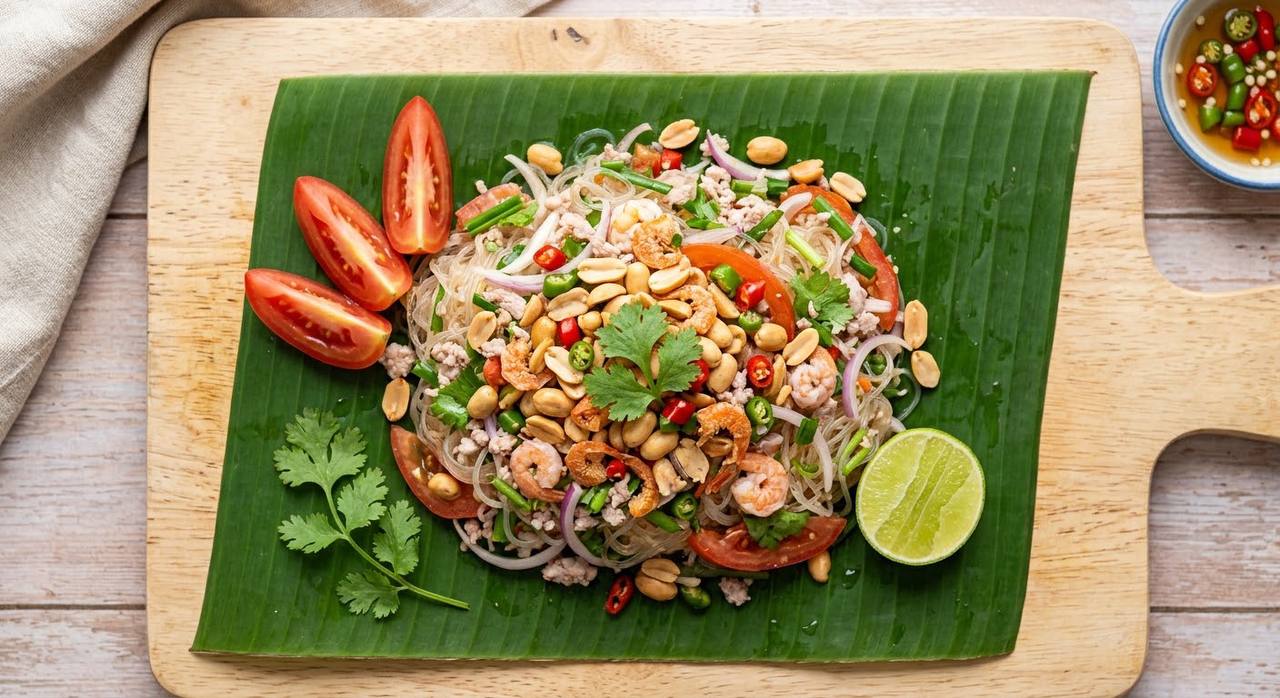
Chewy glass noodles tossed in lime, fish sauce and sugar, with crisp dried shrimp, fried peanuts and a fresh tomato crunch. The salad that eats like a full lunch.
ยำวุ้นเส้น is the glass-noodle member of the Thai yum family — the same lime-fish-sauce logic as som tum, transferred to slippery, translucent วุ้นเส้น, mung-bean vermicelli. The TrueID source labels its version โบราณ — ancient, and promises it two ways: เส้นเหนียวนุ่ม ไม่อืด — noodles chewy-soft, not soggy — and แบบแห้ง ๆ ไม่เฉอะแฉะ, a dry salad, not a puddle. The noodles carry the dressing; they don't swim in it.
The crunch comes in threes: ถั่วลิสงทอด, peanuts fried from cold oil so they cook through to the centre without burning; กุ้งแห้ง, dried shrimp crisped in the same oil until they smell like the sea; and raw shallot, chilli and tomato cut fresh at the end. The pork is the quiet protein — blanched together with the noodles so nothing gets washed in a second pot.
And the dressing is the whole point: six tablespoons of lime to six of fish sauce, two of sugar — sharp, salty, just sweetened. The source is proud of what it doesn't contain: no MSG, the flavour built on the dried shrimp and the fry oil instead.
| Thai | English | Amount |
|---|---|---|
| วุ้นเส้น | Glass noodles (mung-bean vermicelli) | 100 g |
| หมูบด | Minced pork | 150 g |
| กุ้งแห้ง | Dried shrimp | 20 g |
| ถั่วลิสงทอด | Fried peanuts | 30 g |
| หอมแดง | Shallots, sliced | 30 g |
| พริก | Chillies, sliced | 15 g |
| ต้นหอม | Spring onions | 5 g |
| ผักชี | Coriander | 5 g |
| มะเขือเทศ | Tomato, sliced | 50 g |
| น้ำมะนาว | Fresh lime juice | 6 tbsp |
| น้ำปลา | Fish sauce | 6 tbsp |
| น้ำตาลทราย | Sugar | 2 tbsp |
Dried shrimp and peanuts. The โบราณ version builds its depth on them; the Kapook minced-pork version uses neither — it leans on its dressing. Two generations of the same salad.
Pickled garlic brine. Kapook's dressing is fish sauce, lime and น้ำกระเทียมดอง — the brine from the pickled-garlic jar — plus the pickled garlic itself, sliced in. The โบราณ version wants none of it. The brine is the shop-stall's sour-salty shortcut.
The noodle trick. Kapook blanches the noodles, then shocks them with room-temperature water — the น็อก (knock) that sets them chewy so they never go soggy. The โบราณ version simply times the blanch. Same goal, different route.
Celery. Kapook adds ขึ้นฉ่าย (Chinese celery) and onion; the โบราณ version keeps shallot and skips the celery. Both claim the dish; the crunch differs.
The loaded version. One Wongnai cook (134K reads) makes a fifteen-minute modern build — cabbage, shimeji mushrooms, hot dogs, หมูยอ pork sausage, carrot — blanched together and dressed. Delicious, but it's a different dish wearing the same name.
This recipe is translated from the following Thai-language sources. Where they disagree, we've said so.
1. TrueID (กินได้อร่อยด้วย) — "สูตรยำวุ้นเส้นโบราณ เส้นเหนียวนุ่ม ไม่อืด อร่อยจัดจ้าน แบบไม่ใส่ผงชูรส" (the ancient no-MSG version used here) — food.trueid.net
2. Kapook — "ยำวุ้นเส้นหมูสับ เมนูยำรสแซ่บทำง่าย พร้อมเทคนิคเส้นไม่อืด" (the pickled-garlic-brine dressing and the noodle-shock technique) — cooking.kapook.com
3. Wongnai (ImAiw) — "ยำวุ้นเส้น" (the loaded 15-minute modern version, 134K reads) — wongnai.com
4. Kapook — "น้ำยำวุ้นเส้น น้ำยำอเนกประสงค์ ทำง่ายใน 1 นาที" (the universal freezable yum dressing) — cooking.kapook.com