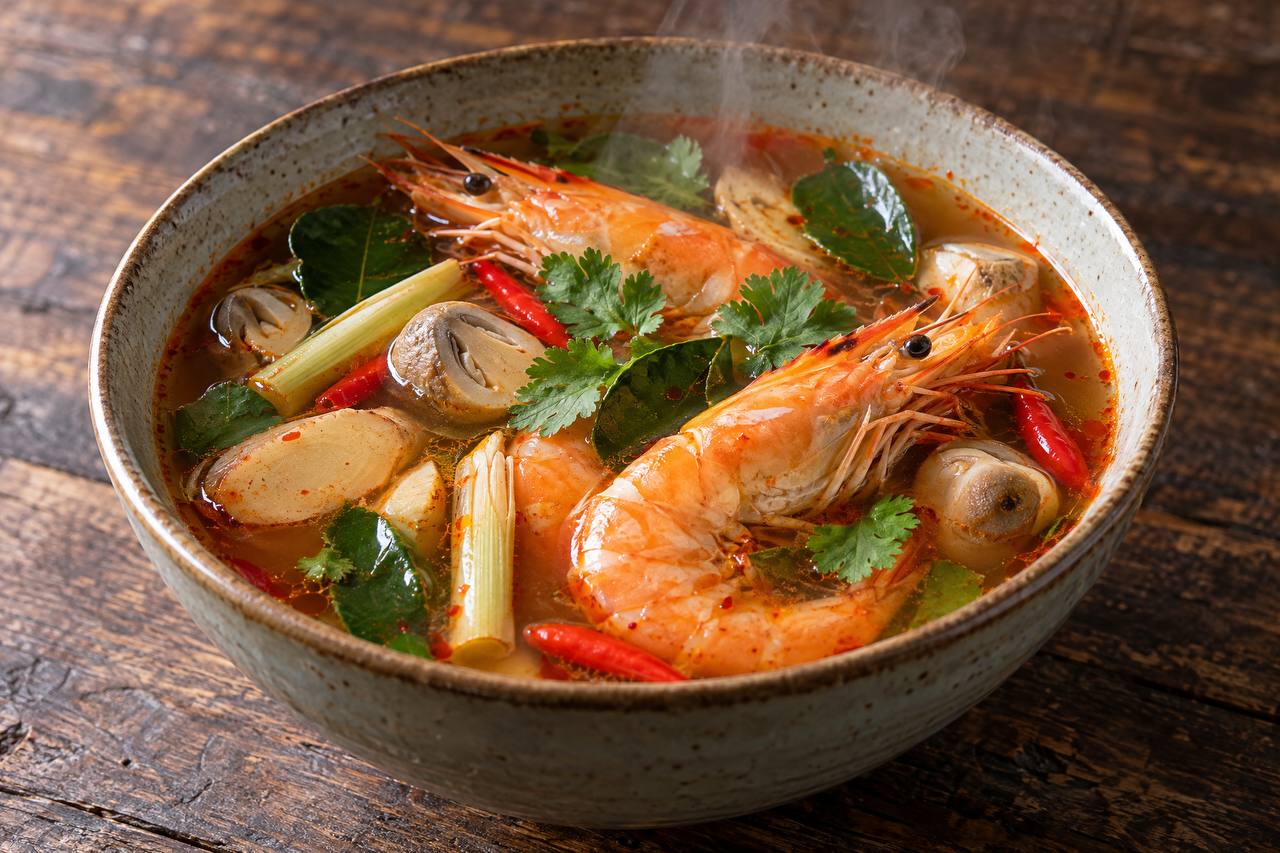
The soup on every Thai family table — clear, sour-leading, and never bitter, because the lime goes in after the heat is off. The creamy version is the modern adaptation, not the original.
Pad thai may be the dish the world knows, but tom yum is the one on Thai dinner tables, in the ตามสั่ง rotation alongside stir-fries and curries. No one knows who invented it — the Michelin Guide notes the earliest records are of tom yum pla, the fish version, in the reign of King Rama V — and it has since branched into clear (nam sai), creamy (nam khon), dry (Jay Fai's famous version) and even fried rice.
The ancient form is clear and not sweet. Chef Ou (Sittikorn Chantop) of AKKEE — 1 Michelin star and the 2025 Michelin Young Chef Award — describes his as "ancient Thai style, not sweet, with no milk or cream of any kind." His richness comes from prawn tomalley fried with herbs, never from dairy. And every serious Thai source shares one rule: the lime goes in after the heat is off. Boiled lime turns bitter — this is the legendary fix between an average tom yum and a great one.
| Thai | English | Amount |
|---|---|---|
| กุ้ง (หัว+เปลือกเก็บไว้) | Large prawns, heads and shells kept on | 500 g |
| น้ำเปล่า | Water | 5 cups |
| ข่าแก่ | Mature galangal, sliced | 10 slices |
| ตะไคร้ (ทุบ) | Lemongrass, bruised and cut | 3 stalks |
| ใบมะกรูด (ฉีก) | Makrut lime leaves, torn | 8 |
| รากผักชี (ทุบ) | Coriander roots, bruised | 4 |
| หอมแดง (บุบ) | Shallots, bruised | 4 |
| พริกขี้หนูสวน (บุบ) | Bird's eye chillies, bruised | 20 |
| เห็ดฟาง | Straw mushrooms | 200 g |
| น้ำปลา | Fish sauce | 4 tbsp |
| น้ำมะนาว (บีบหลังปิดไฟ) | Lime juice, squeezed off the heat | 5 tbsp |
| น้ำตาลปี๊บ (ถ้าชอบ) | Palm sugar (optional — the ancient recipe takes none) | 1 tsp |
| ผักชีฝรั่ง | Sawtooth coriander | 2 stems |
The creamy version is the modern restaurant adaptation — and Thai sources can't agree on how to do it, which tells you it was never canonical:
The riverside-shop way (Pantip): 2 tbsp nam prik pao stirred in off the heat, then ½ cup evaporated milk (or ¼ cup coconut milk) for the creamy body.
The Michelin way (Chef Ou): no milk at all — 150 g of prawn tomalley fried in 15 g lard with fine lemongrass and torn makrut, strained, and stirred into the soup for richness.
The ancient way (Chef Tuck): thickened without nam prik pao or evaporated milk — a technique version with no sweetness and no "western milk smell."
Clear vs creamy. Both are served in Thailand, but the classic is clear. Creamy is the modern restaurant riff.
How to cream it: evaporated milk, coconut milk, fried prawn tomalley, or nothing — four documented answers.
Sugar: the Michelin ancient recipe takes none ("not sweet"); the Pantip riverside recipe takes 1 tsp palm sugar. Sour leads either way.
Chillies: bruised (Pantip — "chopping makes them sharply hot; bruising makes them fragrant-hot") vs sliced.
Mushrooms: straw mushrooms are the classic; oyster and others are common substitutes.
Prawns: river prawns (classic), tiger prawns, white prawns — whatever is freshest, shells on.
This recipe is translated from the following Thai-language sources. Where they disagree, we've said so.
1. Michelin Guide Thailand (28 Jan 2025) — "ต้มยำกุ้งสูตร (ไม่) ลับระดับดาวมิชลิน จานเด็ดของเชฟอู๋-สิทธิกร จันทป แห่งร้านอัคคี" — Chef Ou, AKKEE (1 star) — guide.michelin.com
2. Pantip thread 44126406 — "ต้มยำกุ้ง ในตำนาน" (the legendary riverside-shop recipe) — pantip.com
3. Chef Tuck (FOOD SCIENCE by CHEF TUCK) — "ต้มยำน้ำข้นโบราณ — ข้นได้ไม่ต้องใส่พริกเผาและนมข้นจืด" — facebook.com