Recipe · Thailand · The Rolls That Must Not Burst

Thai Spring Rolls (ปอเปี๊ยะทอด)

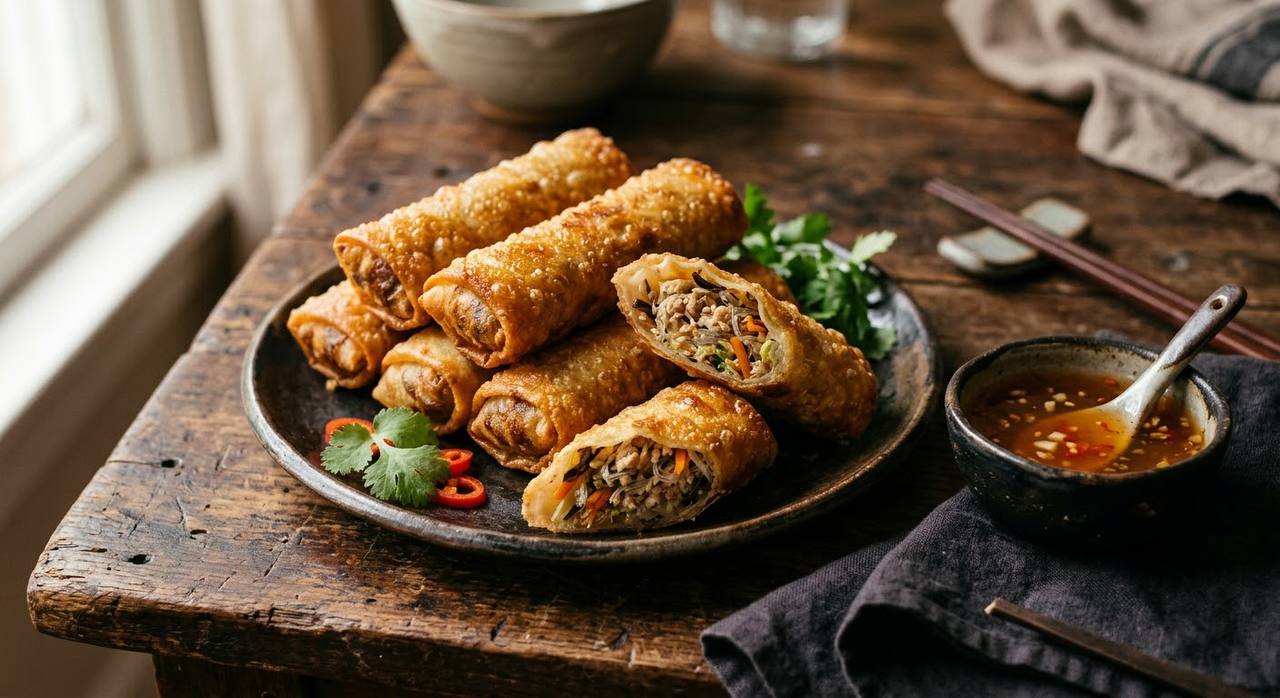
Glass noodles, minced pork and cabbage in a white-soy filling, rolled tight in thin pastry and fried until the wrapper blisters — dipped in plum sauce and gone in two bites.

Thai spring rolls (ปอเปี๊ยะทอด) — crispy fried spring rolls with plum dipping sauce

The Rolls That Must Not Burst

ปอเปี๊ยะ came to Thailand with the Chinese traders, and the Thai kitchen kept the name and made the roll its own: the wrapper thin and blistered, the filling soft with glass noodles, the crunch the entire point. They're the standard first course of Thai restaurant menus — and the dish that separates careful cooks from the ones scraping exploded rolls out of the fryer.

The technique is everything. The filling must be stir-fried dry and cooled completely before wrapping — a wet or warm filling steams the wrapper from inside and bursts it in the oil. The wrap is folded corner-over-corner and rolled tight, and the published recipes seal the last corner with beaten egg, the specific insurance the sources name for a roll that stays closed. Roll them just before frying; the filling can be made ahead, the rolls cannot.

The dip is the third character. The sources send the rolls out with น้ำจิ้มบ๊วย — plum sauce, or three-flavour sauce, or sweet chilli. Plum is the classic: sweet-sour, dark, and exactly the right cut against the fried wrapper. The vegetarian filling is just as published as the pork one — same seasoning, no meat, sold from the same street stalls.
The Recipe (pork and glass-noodle filling — makes 20–25 rolls)

ThaiEnglishAmount
หอมใหญ่สับOnion, chopped50 g
หมูบดMinced pork300 g
แครอต (ขูดเส้น)Carrot, julienned100 g
กะหล่ำปลีซอยCabbage, shredded100 g
วุ้นเส้น (แช่น้ำ หั่นท่อนสั้น)Glass noodles, soaked, cut short30 g
เห็ดหอมสับShiitake, chopped30 g
ซีอิ๊วขาวWhite soy sauce3 tbsp
เกลือ · พริกไทยSalt and peppera little
แผ่นปอเปี๊ยะSpring-roll pastry sheets1 pack
ไข่ไก่ (ตี — ทาแผ่นแป้ง)Egg, beaten — for sealing1
น้ำมันพืชNeutral oil, for fryingas needed
น้ำจิ้มบ๊วย / น้ำจิ้มสามรส / น้ำจิ้มไก่Plum sauce, three-flavour sauce, or sweet chilli — to serveas liked

The Method

  1. Fry the filling. Onion until fragrant, then the pork, then carrot, cabbage, glass noodles and shiitake; season with white soy, salt and pepper; fry until just cooked and dry.
  2. Cool it. Completely. A warm filling bursts the roll — this is the step that decides the fry.
  3. Wrap. Corner towards you, filling near the bottom corner, bottom folded over, sides folded in, rolled tight.
  4. Egg-seal. The last corner brushed with beaten egg and pressed shut — the source's insurance against bursting.
  5. Fry. Medium heat until the wrapper is golden and blistered. Drain on paper.
  6. Serve. Hot, with plum sauce — or the three-flavour, or sweet chilli. Eaten in two bites, before the crunch has time to soften.

Where Thai Sources Disagree

The seal. TrueID brushes the final corner with beaten egg; other published methods use a flour-water paste or plain water. The egg is the strongest seal and the source's explicit answer to bursting.

The dip. Plum sauce (TrueID), three-flavour sauce or tomato sauce (Kapook), sweet chilli at the stalls. All published — plum is the classic, the three-flavour is the cook's choice, sweet chilli is what comes free with the delivery.

The filling. Pork-mince is the standard; the vegetarian version (glass noodles, mixed vegetables, mushrooms, TVP) is equally published and sold from the same stalls. The seasoning barely changes — white soy does the work.

Filling temperature. Every source cools the filling before wrapping. None argue about this one.

Pastry. The thin wheat sheets (แผ่นปอเปี๊ยะ) for fried rolls; the soft rice-paper version belongs to the fresh Vietnamese-style rolls — a different dish the same word is sometimes stretched over.

How Western Versions Get It Wrong

UK Ingredient Notes

Sources

This recipe is translated from the following Thai-language sources. Where they disagree, we've said so.

1. Kapook — "7 สูตรไส้เปาะเปี๊ยะทอด กรอบนุ่ม พร้อมวิธีห่อ" (pork and glass-noodle filling, full quantities, the wrap technique) — cooking.kapook.com

2. TrueID — "12 สูตร ปอเปี๊ยะ ไส้ต่างๆ ทำขายสร้างอาชีพ" (the egg-seal method, the plum-sauce dip, the vegetarian filling) — food.trueid.net

Johnny Tiger
Johnny researches and translates Thai recipes from Thai-language sources — chefs, restaurants and home cooks in Thailand — and publishes them with their sources cited. No westernised shortcuts, no invented steps.