Recipe · Thailand · The Drink With a Colour Story

Thai Iced Tea (ชาไทย)

Spiced black tea steeped strong, condensed milk, full ice, evaporated milk poured over the top. The orange is practical, not natural — and Thailand argues about the name.

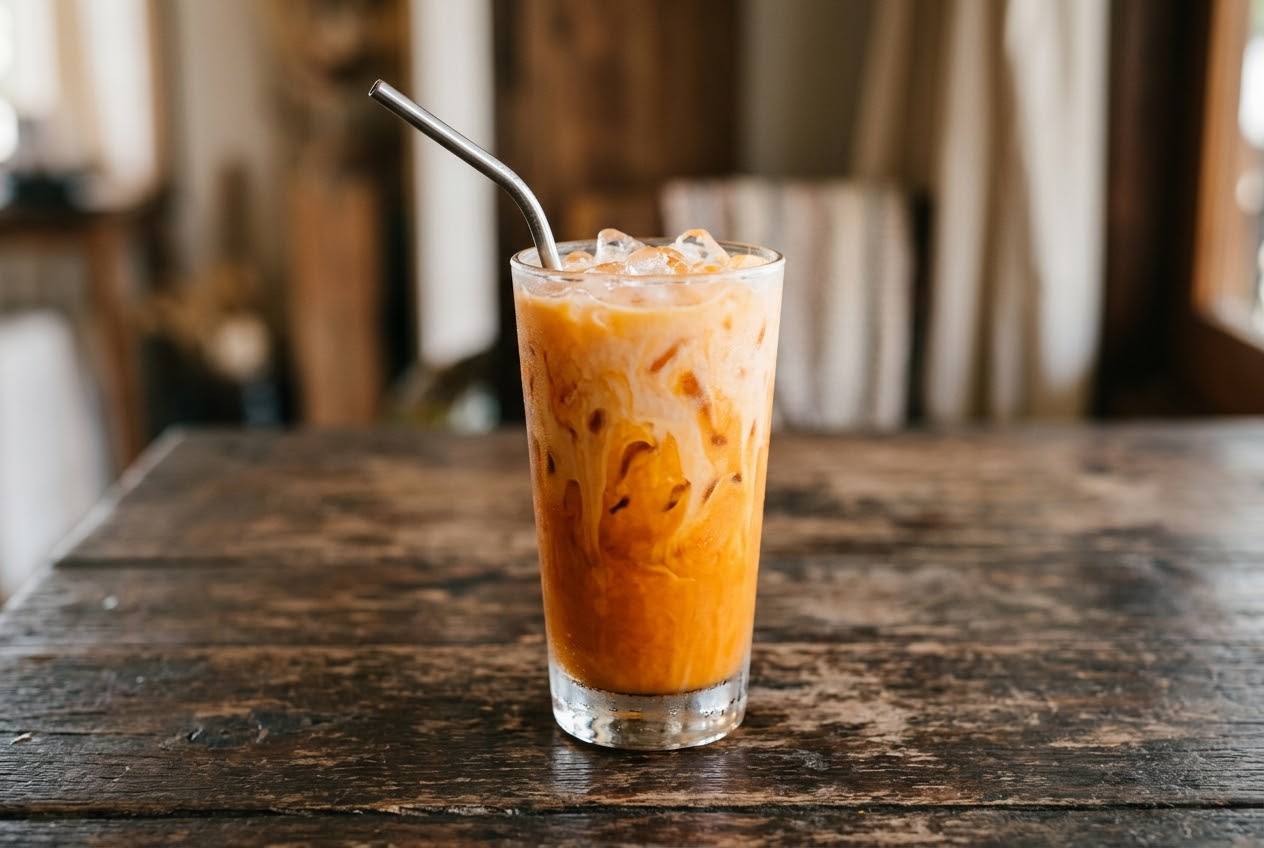
Thai iced tea (ชาไทย) tall glass of orange tea with evaporated milk streaks over ice

Why Your Thai Tea Is Orange

The colour is the dish's best story: it's added food colouring, and the reason is logistics. Once milk goes in, iced tea and iced coffee both turn beige — so shops coloured the tea orange so staff could tell ชาเย็น from โอเลี้ยง apart at a glance. There's an older theory too: servants re-steeping spent leaves until the colour faded, then restoring it with roasted tamarind seed. Either way, the orange is practical, not natural — a fact most western recipes never mention.

The tea itself is the real thing: a spiced black-tea blend — Ceylon leaves cut with star anise and cardamom — the famous Cha Tra Mue (Number One) brand. Red pack is fragrant; gold pack is stronger and pricier. And the naming is a national argument: ชาเย็น means the classic iced version with condensed milk, ชานม is milk tea, ชาดำ/ชาใส means no milk. A Thai beverage supplier's FAQ is literally titled "Ordered cha yen, why did I get cha nom?" — the country argues about this over the counter every day.

On Pantip the beginner's struggle is the same thread every year: "three days of brewing Cha Tra Mue and it's still not good." The answer is never the brand. It's the steep, the sweetness before the ice, and the pour.
The Recipe (Rin's Cookbook home method — 2 glasses)

ThaiEnglishAmount
ผงชาไทย (ตรามือ)Thai tea powder, Cha Tra Mue red pack4 tbsp
น้ำร้อนจัดVery hot water480 ml
นมข้นหวานSweetened condensed milk4 tbsp
น้ำตาลทรายSugar2 tsp
น้ำแข็งIceto fill two glasses
นมข้นจืดEvaporated milk, to pour over60 ml

The southern (ปักษ์ใต้) blend, from Wongnai's ten-recipe roundup: 1 tbsp fragrant tea + 1 tbsp Thai tea + 1 tbsp Ceylon tea, 200 ml very hot water, 1 tsp sugar, 2 tbsp condensed milk, ice, 50 ml fresh or evaporated milk.

The Method

  1. Steep strong. Very hot water over the tea powder, stirred, left 3–5 minutes — long enough for the spices to come out, not so long it turns harsh. Strain completely.
  2. Sweeten warm. Condensed milk and sugar stirred in while the tea is still warm, until dissolved. The tea must be sweet and strong before the ice, because the ice will dilute both — this is the Pantip three-day lesson.
  3. Ice first. Glasses filled to the top, tea poured over, room left at the rim.
  4. The pour. Evaporated milk poured slowly over the top so it streaks down through the tea — the layered look is the signature. Serve unstirred; each drinker stirs their own.

Where Thai Sources Disagree

The sugar. Condensed milk alone, or condensed plus extra sugar — shops run sweeter; home versions cut back.

The milk on top. Evaporated milk poured over (the classic), stirred in, or fresh milk — all standard, the pour is the aesthetic choice.

The blend. One brand (Cha Tra Mue red or gold) against the southern three-tea mix of fragrant, Thai and Ceylon.

Creamer. Commercial litre batches use non-dairy creamer for cost and stability; home glasses never need it.

Hot. ชาร้อน — the same build served hot — exists, but the iced version is the icon.

How Western Versions Get It Wrong

UK Ingredient Notes

Sources

This recipe is translated from the following Thai-language sources. Where they disagree, we've said so.

1. TrueID (21 May 2024, 360k reads) — "สูตรชงชาไทย ชาเย็น ชานม ชาส้ม เข้มข้นหวานมัน" (shop recipes, glass/bottle/litre scale) — food.trueid.net

2. Kapook / Rin's Cookbook — "สูตรชงชาไทย ชาเย็น สูตรชงชาแบบเข้มข้น หวาน หอม ละมุน" (home method, layered pour) — cooking.kapook.com

3. Wongnai — "10 สูตรชาไทย" (incl. the southern three-tea blend) — wongnai.com

4. Pantip thread 32818339 — "ผมลองชาตรามือชงมา 3 วัน ยังไม่อร่อยเลยครับ" (the beginner struggle) — pantip.com

5. Siamcoolermart — "แจกเทคนิคการชงชาไทยให้อร่อย" (the colour history) — siamcoolermart.com

Johnny Tiger
Johnny researches and translates Thai recipes from Thai-language sources — chefs, restaurants and home cooks in Thailand — and publishes them with their sources cited. No westernised shortcuts, no invented steps.