Recipe · Thailand · The Fritters of the Street Vendors

Thai Banana Fritters (กล้วยแขก)

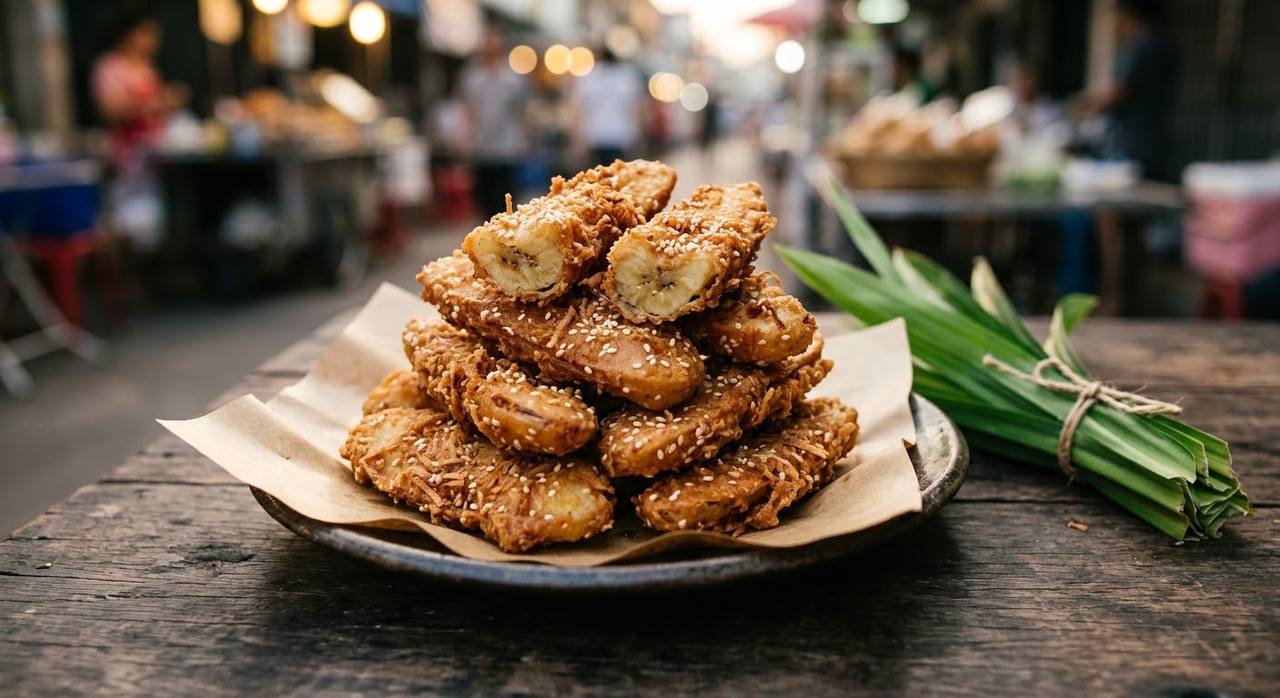
Nam wah bananas sliced lengthwise, a rice-flour batter with coconut and sesame, a spoon of lime water for the crunch — and pandan leaves frying in the oil. The street vendor's art, by the bag.

Thai banana fritters (กล้วยแขก) with sesame-seeded crisp batter and pandan leaves

The Fritters of the Street Vendors

The name is the history: กล้วยแขก means "guest bananas" — แขก being the old Thai word for Indian and Muslim visitors. The fritters arrived with those communities' street vendors, and they never left. Every Thai market still has a stall frying them in a wide pan of oil with pandan leaves floating in it, turning the whole street fragrant.

The banana matters more than the batter. Thai cooks use กล้วยน้ำว้า — the nam wah banana, short and firm and barely ripe, "ห่าม" — just past green. Slice a ripe Cavendish lengthwise and it collapses into mush in the oil; the nam wah holds its shape and stays starchy-sweet inside the crisp shell. This is not a banana you can casually swap.

And the shell has one quiet trick: น้ำปูนใส — clear lime water. A spoonful of the clear liquid from settled edible lime paste raises the batter's pH and keeps the crust crisp long after it leaves the oil. Both Thai sources below use it. It's the difference between a crack and a chew.

The Recipe (serves 4–6 — makes 15–20 pieces)

ThaiEnglishAmount
กล้วยน้ำว้าสุกห่ามNam wah bananas, just-ripe1 comb
แป้งข้าวเจ้าRice flour250 g
แป้งข้าวโพดCorn flour25 g
น้ำตาลทรายSugar100 g
เกลือป่นSalt — the source's amount; halve it if you prefer1 tbsp
ผงฟูBaking powder1½ tbsp
มะพร้าวขูดShredded coconut200 g
งาขาว (ไม่คั่ว)White sesame, untoasted50 g
นมข้นจืดEvaporated milk — or 140 g head coconut milk250 g
น้ำปูนใสClear lime water70 ml
ใบเตยPandan leaves1 cup
น้ำมันปาล์มPalm oil, for deep-fryingas needed

The Method

  1. Dry mix. Rice flour, corn flour, sugar, salt and baking powder together; evaporated milk whisked in until smooth.
  2. Lime water. Stirred in next — the crispness insurance.
  3. Coconut and sesame. Folded through until evenly distributed.
  4. Slice. Bananas peeled and cut lengthwise, half to one centimetre thick — thick enough to hold, thin enough to cook through.
  5. Oil and pandan. Medium heat, pandan leaves into the oil. They perfume everything that follows.
  6. Fry. Each slice dipped in batter, fried in batches, turned once, until golden. Drain on paper.
  7. Eat warm. The crack is a fresh thing — these do not improve by sitting.

Where Thai Sources Disagree

The flour. Rice flour plus a little corn flour (Wongnai) against the shop shortcut of ready-made crispy fry flour (aroifin). The ready flour works; the two-flour mix is the recipe you can read.

The liquid. Evaporated milk (Wongnai) against head coconut milk (aroifin). The milk version is the street standard; the coconut version is richer and slightly softer-shelled.

Salt. A full tablespoon (Wongnai's salty-sweet street profile) against a quarter teaspoon (aroifin). We've transcribed the source amount and flagged it — start at half if you're not sure.

Lime water. Both sources use it, in different amounts. It is not optional for the texture; only the dose is argued.

Banana ripeness. Everyone says ห่าม — just-ripe. A fully ripe banana fritter is a different, softer thing.
How Western Versions Get It Wrong

UK Ingredient Notes

Sources

This recipe is translated from the following Thai-language sources. Where they disagree, we've said so.

1. Wongnai — "วิธีทำ กล้วยแขก สูตรแป้งกรอบ ทำกินก็ง่าย จะทำขายก็เฮง!" (the rice-flour batter with evaporated milk, coconut and sesame) — wongnai.com

2. aroifin — "วิธีทำ กล้วยทอด สูตรกล้วยทอด กล้วยแขก ทำเองได้ ทำขายกำไรดี" (2 May 2025 — the coconut-milk batter and the pandan-in-the-oil technique) — aroifin.com

Johnny Tiger
Johnny researches and translates Thai recipes from Thai-language sources — chefs, restaurants and home cooks in Thailand — and publishes them with their sources cited. No westernised shortcuts, no invented steps.