Recipe · Thailand · Rubies in Coconut Milk

Tab Tim Grob (ทับทิมกรอบ)

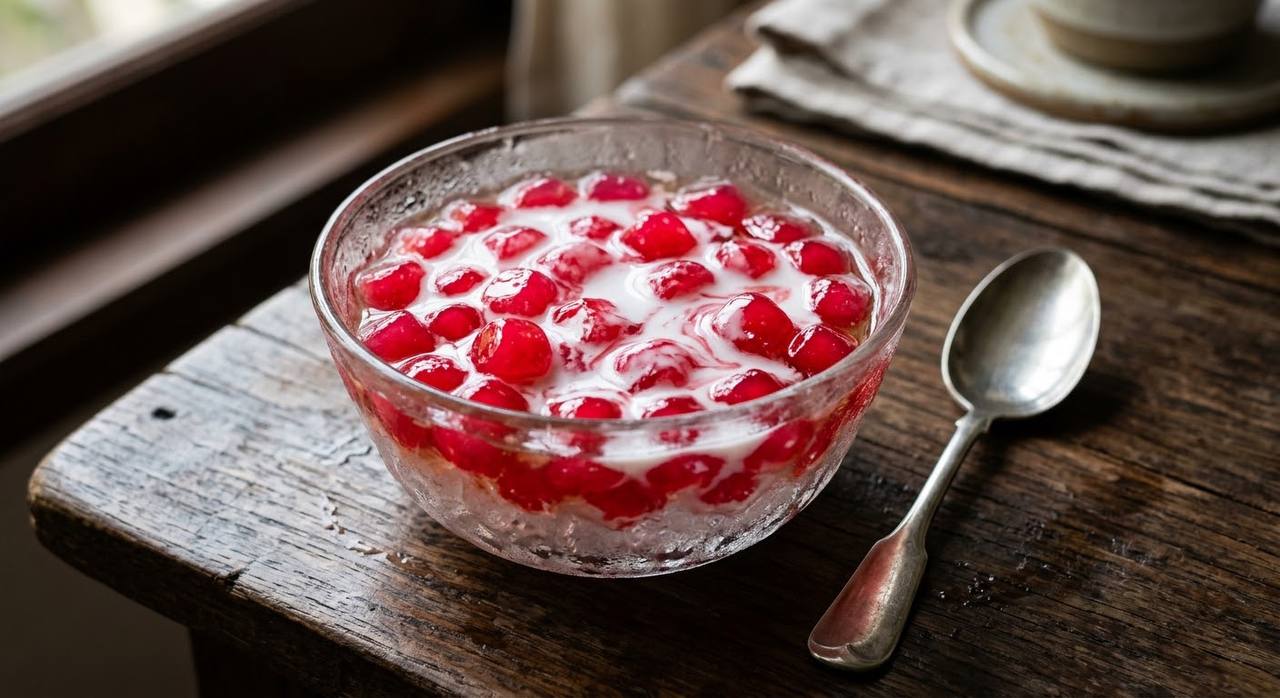
Water chestnuts dyed ruby-red, rolled in tapioca starch, boiled and shocked until each piece is a translucent jewel with a crisp heart — served cold in scented syrup under salted coconut cream.

Tab tim grob (ทับทิมกรอบ) ruby-red water chestnut pearls in syrup with salted coconut cream and crushed ice

Rubies in Coconut Milk

ทับทิมกรอบ means "crisp rubies" — the name is literal. Diced water chestnuts are soaked in red syrup until the colour seeps through the flesh, rolled in tapioca starch, and boiled just long enough for the starch to turn into a translucent shell. Then the trick: the rubies go straight from the boil into iced water. The shock sets the shell and keeps the chestnut heart crisp. That one step is the difference between jewels and mush.

The dessert is an old palace and café classic — the same Chinese-Thai café culture that gave Thailand its sock-brewed coffee sold this over shaved ice a hundred years ago. It is still the dessert most Thai restaurants reach for when the menu needs something cold, pretty and not too sweet.

The third element matters as much as the rubies: the coconut cream is salted, and the syrup is scented — pandan in most recipes, jasmine in others, and in the most traditional version the coconut milk is scented with candle smoke, อบควันเทียน. Sweet against salt against the cold. It works.

The Recipe (serves 4–6)

ThaiEnglishAmount
The rubies
แห้ว (ต้มสุก)Water chestnuts, peeled and boiled until just cooked300 g
น้ำหวานสีแดงRed syrup — Hale's Blue Boy; or water with red food colouring150 g
แป้งมันสำปะหลังTapioca starch150 g
The syrup
น้ำตาลทรายSugar200 g
น้ำWater250 ml
ใบเตยPandan leaves — or ¼ tsp jasmine essence3
The coconut cream
กะทิCoconut milk400 ml
น้ำตาลทรายSugar120 g
เกลือSalt — do not skip it½ tsp
นมข้นจืดEvaporated milk — optional, one source's addition40 g

The Method

  1. Prep the chestnuts. Peel, boil until just cooked, dice into roughly one-centimetre cubes.
  2. Dye. Soak the cubes in the red syrup 15–20 minutes, until the colour soaks through the flesh, not just onto the surface.
  3. Coat. Drain briefly — not bone-dry — and roll in tapioca starch until every piece is coated. For a thicker shell, dampen and roll twice.
  4. Boil and shock. Into boiling water; when they float with translucent shells, lift them straight into iced water. The shock is what keeps the heart crisp.
  5. Syrup. Sugar dissolved in water with the pandan leaves over low heat, simmered briefly, cooled completely.
  6. Coconut cream. Warmed gently — never boiled, or it splits — with the sugar and salt stirred in until dissolved. Cool.
  7. Assemble. Rubies in a bowl, cold syrup to nearly cover, salted coconut cream poured over, over crushed ice.

Where Thai Sources Disagree

The colour. Red syrup — Hale's Blue Boy, the sweet sala-scented one — against plain water with red food colouring (Wongnai's way). The syrup adds sweetness and a faint fruit note; the colouring adds nothing but red.

The scent. Candle smoke (อบควันเทียน — the old way: coconut milk held under a lit candle's smoke), pandan (Wongnai), or jasmine essence (TrueID). All three are published; the candle is the most traditional and the most effort.

Evaporated milk. aroifin stirs 40 g of evaporated milk into the coconut cream for richness; the other recipes keep the cream plain. Both work — the salt stays regardless.

Single or double coat. One starch coat for a thin shell, two for the thick-chewy version. Sources describe both; the double coat holds better through a long soak.

How the chestnut is cooked. Some recipes boil the chestnuts first, some only par-cook, some start from raw and rely on the final boil. The just-cooked version above keeps the heart at its crispest.
How Western Versions Get It Wrong

UK Ingredient Notes

Sources

This recipe is translated from the following Thai-language sources. Where they disagree, we've said so.

1. Wongnai — "วิธีทำ ทับทิมกรอบ เมนูขนมไทย ฉบับหนึบนอกกรอบใน" (18 Dec 2024 — food-colouring method, pandan syrup) — wongnai.com

2. TrueID — "สูตรขนมไทย ทับทิมกรอบ เมนูขนมทำง่าย อร่อยชื่นใจ หอมกะทิควันเทียน" (8 Dec 2020 — red-syrup method with jasmine-scented syrup and coconut dressing ratios) — food.trueid.net

3. aroifin — "วิธีทำ ทับทิมกรอบ อร่อยคลายร้อน หอมกะทิ หวานเย็นชื่นใจ" (red syrup, candle-smoked coconut milk, the evaporated-milk addition) — aroifin.com

Johnny Tiger
Johnny researches and translates Thai recipes from Thai-language sources — chefs, restaurants and home cooks in Thailand — and publishes them with their sources cited. No westernised shortcuts, no invented steps.