Recipe · Thailand · The Noodles Named for a Drunk

Pad Kee Mao (ผัดขี้เมา)

ผัด means stir-fried, ขี้เมา means drunkard. No alcohol goes in the wok — the name means the dish built to rescue you the morning after, or to eat at 2am before bed. Either way, the heat has to hit.

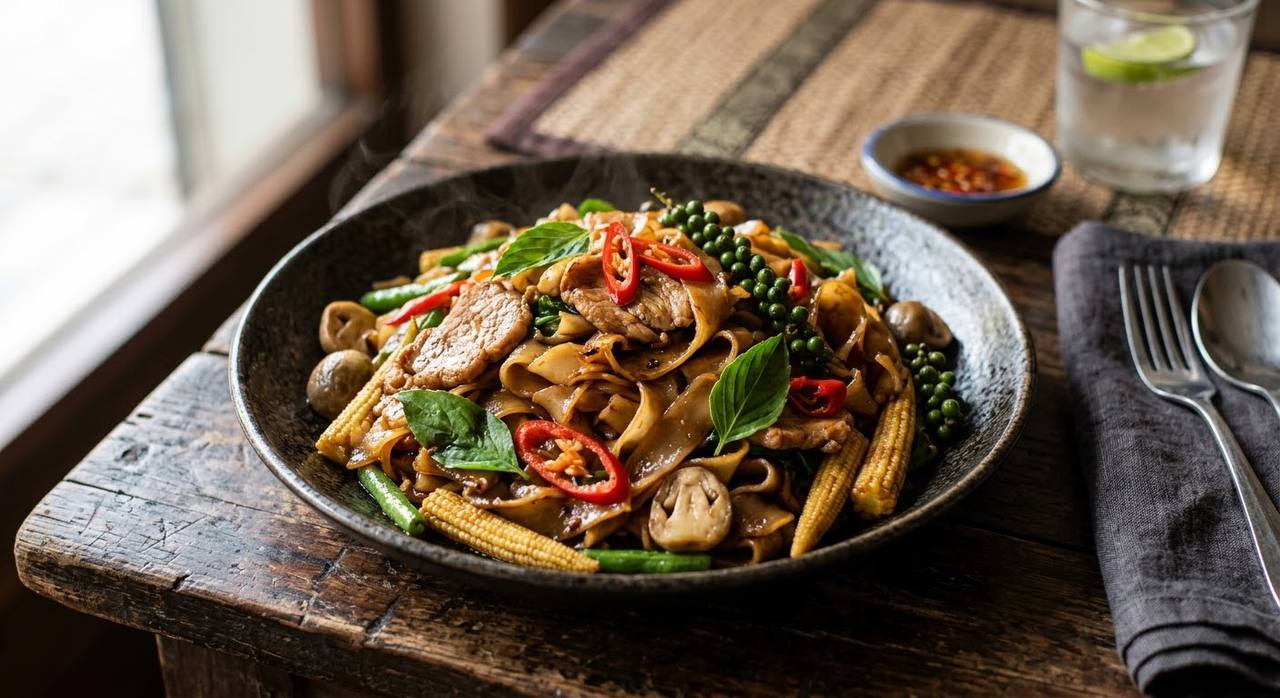
Pad kee mao (ผัดขี้เมา) wide rice noodles with pork, straw mushrooms, baby corn, green beans, fresh green peppercorns and holy basil

The Noodles Named for a Drunk

Nobody has a clean origin story for ผัดขี้เมา — "drunken stir-fry" — and Thai sources are honest about that. The two working theories: it's the food you cook for someone nursing a hangover (chilli, basil and garlic as medicine), or it's what you eat at two in the morning on the way home. Either way, it is a dish about heat: wok heat and chilli heat, not alcohol. There is no beer in the wok. Ever.

The engine is a small pounded relish — chillies, garlic, shrimp paste, salt — fried in oil before anything else goes in. From there the dish splits into the three styles Thai cooks argue about: the classic with fresh wide rice noodles, the herb-heavy no-noodle stir-fry eaten over rice, and the instant-noodle street version every Thai student has made at midnight.

The one ingredient nobody compromises on is the basil — and the classic version uses holy basil (กะเพรา), the peppery one, not the sweet basil of Italian cooking. Fresh green peppercorn sprigs and the whole stems are normal. It is a rough, honest, fast dish.

The Recipe (wide-noodle version — serves 2)

ThaiEnglishAmount
The relish (น้ำพริกผัดขี้เมา)
พริกขี้หนูสวนBird's eye chillies4
พริกชี้ฟ้าเหลืองYellow spur chillies2
พริกชี้ฟ้าแดงRed spur chilli1
กระเทียมไทยThai garlic30 g
กะปิShrimp paste1 tsp
เกลือSalt1 pinch
The stir-fry
น้ำมันรำข้าวRice bran oil2 tbsp
เนื้อหมูสะโพกPork, sliced180 g
เห็ดฟางStraw mushrooms65 g
ข้าวโพดอ่อนBaby corn65 g
แครอทCarrot, sliced30 g
ถั่วแขกGreen beans40 g
พริกไทยอ่อนFresh green peppercorn sprigs3
น้ำสต๊อกไก่Chicken stock¼ cup
ก๋วยเตี๋ยวเส้นใหญ่Fresh wide rice noodles320 g
ซอสหอยนางรมOyster sauce2½ tbsp
ซีอิ๊วขาวLight soy sauce2 tsp
น้ำตาลทรายSugar1½ tsp
ใบกะเพราHoly basil20 g

The Other Two Styles (the no-noodle stir-fry and the 2am version)

The herb stir-fry (ผัดขี้เมาหมู). The same dish with the noodles left out — instead the herb load doubles: pounded chilli and garlic, 50 g fingerroot (กระชาย), fresh peppercorns, and a big bunch of Thai basil (โหระพา), over 450 g of pork. Eaten with rice. In the noodle-less form the herbs are the dish, which is why sources reach for the softer Thai basil instead of holy basil.

The instant-noodle version (มาม่าผัดขี้เมา). Boil instant noodles until just pliable, drain, and fry exactly like the recipe above. This is the dorm-room classic, and Thai food writers treat it with genuine affection rather than apology. It is also the version most likely to have an egg cracked into it.

All three share the same engine: the pounded relish hitting hot oil first.

The Method

  1. Pound the relish. Bird's eye chillies, spur chillies, garlic, shrimp paste and salt — pounded roughly, not puréed. This is the dish's engine.
  2. Blanch the vegetables. Carrot and green beans first, baby corn, then straw mushrooms — each keeps its bite.
  3. Hot wok, pork first. Rice bran oil over high heat; pork fried until cooked through.
  4. Vegetables and relish in. Fry until coated and fragrant.
  5. Stock, then noodles. The stock brings it together; the wide noodles go in and get tossed until separated and coated.
  6. Season and climb. Oyster sauce, light soy, sugar — then raise the heat. A dry fry, never a braise.
  7. Peppercorns. The fresh green peppercorn sprigs and sliced red spur chilli go in near the end.
  8. Basil last. Off the heat, fold in the holy basil so it wilts without blackening. Serve immediately — this dish waits for no one.

Where Thai Sources Disagree

Noodles or not. The classic carries fresh wide rice noodles; the herb version carries none; the street version carries instant noodles. Thai sources publish all three as ผัดขี้เมา without blinking.

The basil. Holy basil (กะเพรา) for the noodle classic — peppery, slightly clove-like; Thai basil (โหระพา) for the herb-heavy no-noodle version. Swapping them changes the dish's register, and the sources disagree about which belongs where.

Shrimp paste in the relish. Phol's recipe pounds a teaspoon of shrimp paste into the relish; plenty of home cooks keep it to chilli, garlic and salt. Both publish.

The seasoning base. Oyster sauce and light soy (the restaurant way) against seasoning powder (ผงปรุงรส, the home way). The powder version is sweeter and softer.

Vegetables. Phol's mix — straw mushrooms, baby corn, carrot, green beans — is the restaurant standard. Minimalist versions run on basil and peppercorns alone.

The name's origin. Thai sources themselves don't agree: hangover cure or late-night hunger. Both stories appear; neither is provable.
How Western Versions Get It Wrong

UK Ingredient Notes

Sources

This recipe is translated from the following Thai-language sources. Where they disagree, we've said so.

1. Phol Food Mafia — "Pad Kee Mao (ก๋วยเตี๋ยวผัดขี้เมา)" สูตรโดย พล ตัณฑเสถียร, from พลพรรคนักปรุง 5 May 2017 (the wide-noodle classic, full quantities and method) — pholfoodmafia.com

2. Wongnai (Supapan Moon) — "สูตร ผัดขี้เมาหมู พร้อมวิธีทำ" (the no-noodle herb stir-fry with fingerroot and fresh peppercorns) — wongnai.com

3. Pantip thread 40082947 — "มาม่า ผัดขี้เมา ทำกินเองง่ายๆ อร่อยๆ" (the instant-noodle street version, home discussion) — pantip.com

Johnny Tiger
Johnny researches and translates Thai recipes from Thai-language sources — chefs, restaurants and home cooks in Thailand — and publishes them with their sources cited. No westernised shortcuts, no invented steps.