Recipe · Thailand · The Cart Coffee
Oliang (โอเลี้ยง)
Traditional Thai coffee — beans roasted with corn and tamarind seeds — sock-brewed dark, sweetened, over ice. Cha yen's bitter cousin.
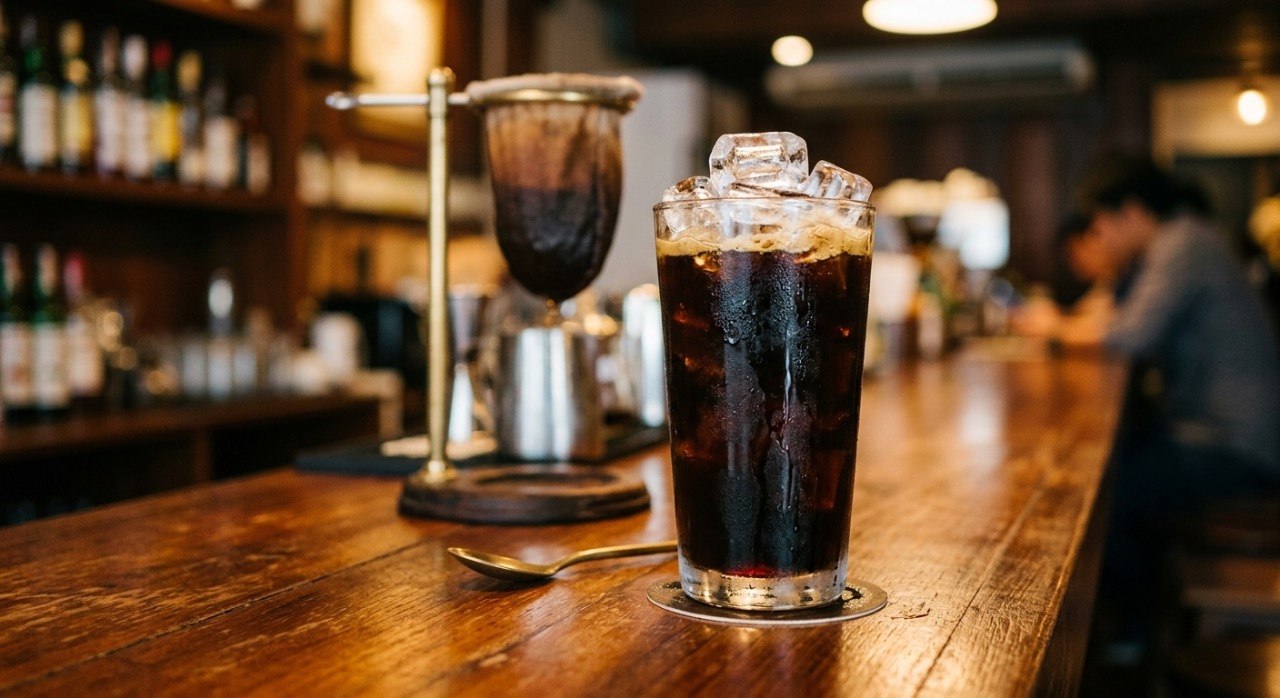
Traditional Thai coffee — beans roasted with corn and tamarind seeds — sock-brewed dark, sweetened, over ice. Cha yen's bitter cousin.
โอเลี้ยง is Thai iced black coffee, and the Kapook source defines it exactly: "black coffee with sugar, served cold" — with one essential difference from everything you've ever called black coffee. The powder is ผงกาแฟโบราณ, traditional coffee: beans roasted with grains — corn and tamarind seeds — then ground together. That blend is the drink's deep, slightly smoky, slightly nutty character, and it's why oliang can't be made properly from a supermarket espresso grind.
The brew is the other half of the ritual. Aroifin's method is the stall standard: the powder goes in a cloth sock, boiling water is poured through, and then — the signature move — the coffee is poured back and forth between two glasses through the sock five or six times until it runs dark and clear. No machine, no filter paper, just gravity and repetition. Sugar is stirred in hot, then the lot goes over a full glass of ice.
The Wongnai guide maps the family, because the cart sells several drinks from the same pot: โอยัวะ is the pure black, no sugar; โอเลี้ยง adds the sugar; โอเลี้ยงยกล้อ floats fresh milk on top; โกปี๊ swaps in condensed milk. Ordering the right one is a fluency test — and the calories go up with every addition.
| Thai | English | Amount |
|---|---|---|
| ผงกาแฟโบราณ | Traditional Thai coffee powder | 2 tbsp |
| น้ำร้อนจัด | Boiling water | 150 ml |
| น้ำตาลทราย | Sugar | 3 tbsp |
| น้ำแข็ง | Ice | 1 full glass (22 oz) |
| ถุงกรองชา | Cloth coffee sock or tea filter | 1 |
| ใบเตย | Pandan leaves, knotted (optional) | 2 |
Kapook's bigger brew: 6–8 tbsp powder to 2 cups water, with two knotted pandan leaves in the brew for the aromatic version — sugar to your own taste.
Pandan or not. Kapook brews with two knotted pandan leaves for the aromatic version; Aroifin's stall recipe is coffee alone. The pandan is a home-kitchen flourish.
How much coffee. Aroifin's single glass runs 2 tbsp to 150 ml of water; Kapook's family batch runs 6–8 tbsp to two cups. Same ratio, different pots.
White or brown sugar. Aroifin and Kapook sweeten with white sugar to taste. The stall batch recipes run brown sugar for a deeper caramel. Both are oliang.
What it's called. The same pot of brewed coffee becomes โอยัวะ (black), โอเลี้ยง (iced + sugar), โอเลี้ยงยกล้อ (with milk floated) or โกปี๊ (condensed milk) depending on what the drinker asks for. The sources disagree only about which name deserves the sugar.
This recipe is translated from the following Thai-language sources. Where they disagree, we've said so.
1. Aroifin — "วิธีชงโอเลี้ยง กาแฟโบราณ ทำกินทำขาย หวานอร่อยเข้มถึงใจ" (the recipe used here, Sep 2025) — aroifin.com
2. Kapook — "โอเลี้ยง วิธีชงกาแฟโบราณหวานหอมเอาใจสายเข้ม" (definition + the pandan version) — cooking.kapook.com
3. Wongnai — "แจกฟรี 6 สูตรกาแฟโบราณ พร้อมนับแคลอรี" (the cart family: โอยัวะ, โอเลี้ยง, โอเลี้ยงยกล้อ, โกปี๊) — wongnai.com