Recipe · Thailand · The Pork-and-Tomato Dip of the North

Nam Phrik Ong (น้ำพริกอ่อง)

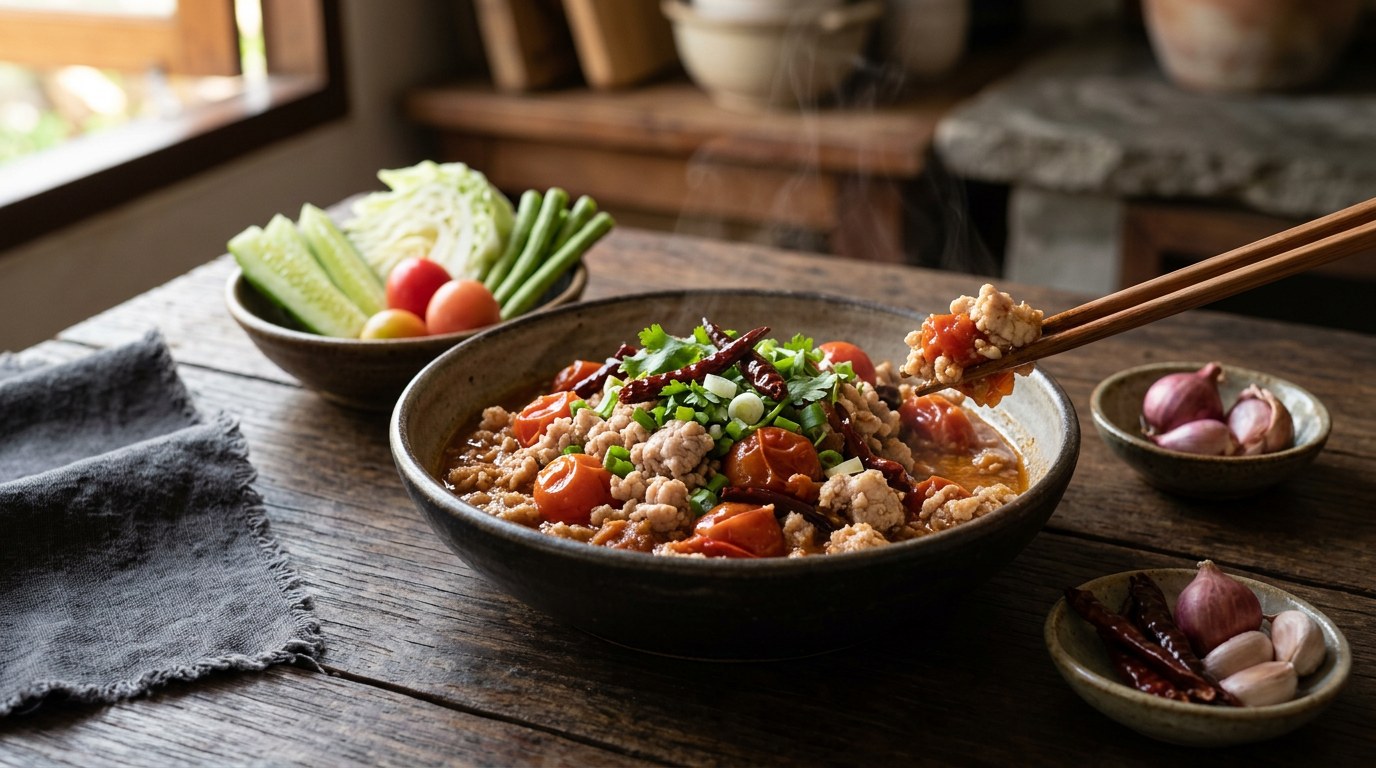
Dried chillies pounded into a paste, fried with fatty minced pork and tomatoes until the tomato collapses into the meat — the north's one dip that gets cooked.

Nam Phrik Ong — The northern Thai chilli dip: dried chillies pounded into a paste, fried with fatty minced pork and tomatoes

The Dip That Fries Its Paste

น้ำพริกอ่อง is the exception in the northern nam phrik family. Every other dip is pounded and left raw; this one is fried — Wongnai's pitch is a bowl of juicy tomatoes and fatty minced pork, hot and slightly sweet, that finishes with a fry until the tomato turns to sauce around the meat. It eats with sticky rice, fresh vegetables and pork crackling, and it's the dip northerners living in Bangkok say they miss most.

The technique has two moments worth keeping. The paste is pounded first — dried chillies, shallots, garlic, salt and the fermented element — then fried in oil until it smells, before anything else goes in. The tomato goes in late, once the pork is nearly cooked, and is fried until it collapses (ผัดจนมะเขือเทศสุกเละ): that collapse is the sauce. Water goes in a splash at a time, only if the pan runs dry, and the final seasoning is sugar and fish sauce — Wongnai's version says the sugar is optional if you don't have a sweet tooth.

Then there's the fermented question, the most argued part of the recipe. The northern original uses thua nao — a disc of fermented soybeans, toasted over the flame and pounded in; Aroifin toasts it before it enters the mortar. Cooks elsewhere swap in shrimp paste (Wongnai's home version), tao jiao yellow bean paste (Kapook's recipe for Thais abroad who cannot find thua nao), or both fermented pastes at once (TrueID). And the shortcut school skips the mortar entirely and opens a jar of red curry paste — nine steps, done.

The Recipe (home version, from Wongnai)

ThaiEnglishAmount
มะเขือเทศเชอร์รีCherry tomatoes20
หมูสับติดมันMinced pork, with fat300 g
พริกแห้งDried red chillies5
กระเทียม (เครื่องแกง)Garlic, for the paste1 head
กระเทียม (ผัด)Garlic, for the fry1 head
หอมแดงShallots2
กะปิShrimp paste½ tbsp
เกลือSalt1 tsp
น้ำตาลทรายSugar1 tsp
น้ำปลาFish sauceto taste (in the method)
น้ำมันOil1 tbsp
น้ำเปล่าWater½ cup
ต้นหอม / ผักชีSpring onion and coriander1 stalk each

The thua nao version (Aroifin): 300 g minced pork, 500 g orange tomatoes, 30 g shallots, 10 g garlic, 20 g soaked dried spur chillies, 1 toasted thua nao disc, 8 g salt, 10 g sugar, 20 g rice bran oil, 1 cup water. The tao jiao version (Kapook): 500 g pork, 1 cup tomatoes, 5–8 garlic cloves, 5 shallots, 1 tbsp coriander root, 1 tsp kapi, 1 tbsp tao jiao, 2–3 tbsp fish sauce, 1 tbsp palm sugar, 1–2 tbsp tamarind water, 2 tbsp oil. The pork-belly version (TrueID): 500 g pork belly, 700 g sida tomatoes, 50 g garlic, 100 g shallots, 4 coriander roots, 10 dried jinda + 5–10 dried spur chillies, 1 thua nao disc, 1 tbsp kapi, ½ tbsp salt, 100 ml water.

The Method

  1. The paste. Shallots, garlic, dried chillies, salt and shrimp paste into the mortar; pound until fine.
  2. The fry. Oil in the wok, the second head of garlic bruised and fried until pale gold; the paste follows and fries until it smells.
  3. The pork. Minced pork in; stir-fry it through the paste, adding a splash of water only if it looks dry.
  4. The tomato. Once the pork is nearly cooked, the tomatoes go in and fry until they collapse into the meat — that collapse is the sauce.
  5. The season. Sugar and fish sauce to taste; skip the sugar if you want it less sweet.
  6. The bowl. Off the heat, topped with chopped spring onion and coriander; serve with fresh vegetables, pork crackling and hot rice.

Where Thai Sources Disagree

The fermented base. Wongnai's home version pounds shrimp paste; Aroifin toasts and pounds thua nao — the northern fermented soybean disc; TrueID uses both together; Kapook's mother's recipe swaps thua nao for tao jiao for Thais abroad. All four claim the original. The flavour shifts with each: kapi is funkier, thua nao nuttier, tao jiao sweeter.

The tomato. Cherry tomatoes (Wongnai, Kapook's shortcut), orange tomatoes (Aroifin — picked for their deep red colour and clear sourness), sida tomatoes (TrueID) and jinda (the 20-minute version). Aroifin's tip: big plum tomatoes are an acceptable stand-in; the orange ones just give the colour the dish is known for.

The pork. 300 g minced with fat (Wongnai, Aroifin), 500 g of pork belly minced at home (TrueID), or 100 g for a two-person condo batch. Aroifin insists on 10–20% fat in the mince — lean pork dries the dip out.

Tamarind or not. Only Kapook's mother's recipe adds tamarind water (1–2 tbsp) on top of the tomatoes — an extra sourness the tomato-only versions don't need. Every other source lets the tomato carry the sourness alone.

Mortar, blender or jar. The traditional mortar (Wongnai, Aroifin, TrueID, Kapook's mother's recipe) against the blender — the 20-minute condo version blends the paste, adding galangal, which no other source does — and the jar of red curry paste in Kapook's nine-step shortcut, which must stay on low heat or it burns bitter.
How Western Versions Get It Wrong

UK Ingredient Notes

Sources

This recipe is translated from the following Thai-language sources. Where they disagree, we've said so.

1. Wongnai — "วิธีทำ 'น้ำพริกอ่อง' เมนูเหนือสูตรต้นตำรับ รสลำจนเผลออู้คำเมือง!" (the recipe used here) — wongnai.com

2. Aroifin — "วิธีทำ น้ำพริกอ่อง อาหารเหนือ สูตรต้นตำรับ อร่อยลำขนาด" by เชฟเจิน (the thua nao version) — aroifin.com

3. Kapook — "น้ำพริกอ่อง สูตรแม่ทำกินง่าย ๆ ใส่เต้าเจี้ยวสไตล์คนไกลบ้าน" from Pantip's ครัวตุ๊กตา (the tao jiao version) — cooking.kapook.com

4. TrueID — "แจกสูตร น้ำพริกอ่อง เมนูอาหารเหนือ อร่อยถูกใจ ทำไม่ยากอย่างที่คิด" by กินได้อร่อยด้วย (pork belly and sida tomatoes) — food.trueid.net

5. Kapook — "วิธีทำน้ำพริกอ่อง สูตรโฮมเมด อร่อยง่าย ๆ พอหายอยาก" from Pantip's Fearbong (the red-curry-paste shortcut) — cooking.kapook.com

6. Wongnai (user Ouncefong) — "น้ำพริกอ่อง สูตรคนเมือง ใน 20 นาที" (the condo version: blender, galangal, no shrimp paste) — wongnai.com

Johnny Tiger
Johnny researches and translates Thai recipes from Thai-language sources — chefs, restaurants and home cooks in Thailand — and publishes them with their sources cited. No westernised shortcuts, no invented steps.