Recipe · Thailand · Lanna's Herbal Dip
Nam Phrik Kha (น้ำพริกข่า)
The north's galangal dip — roasted rhizome and dried chillies pounded fine, dry-fried into a hot, herbal paste that keeps for a month.
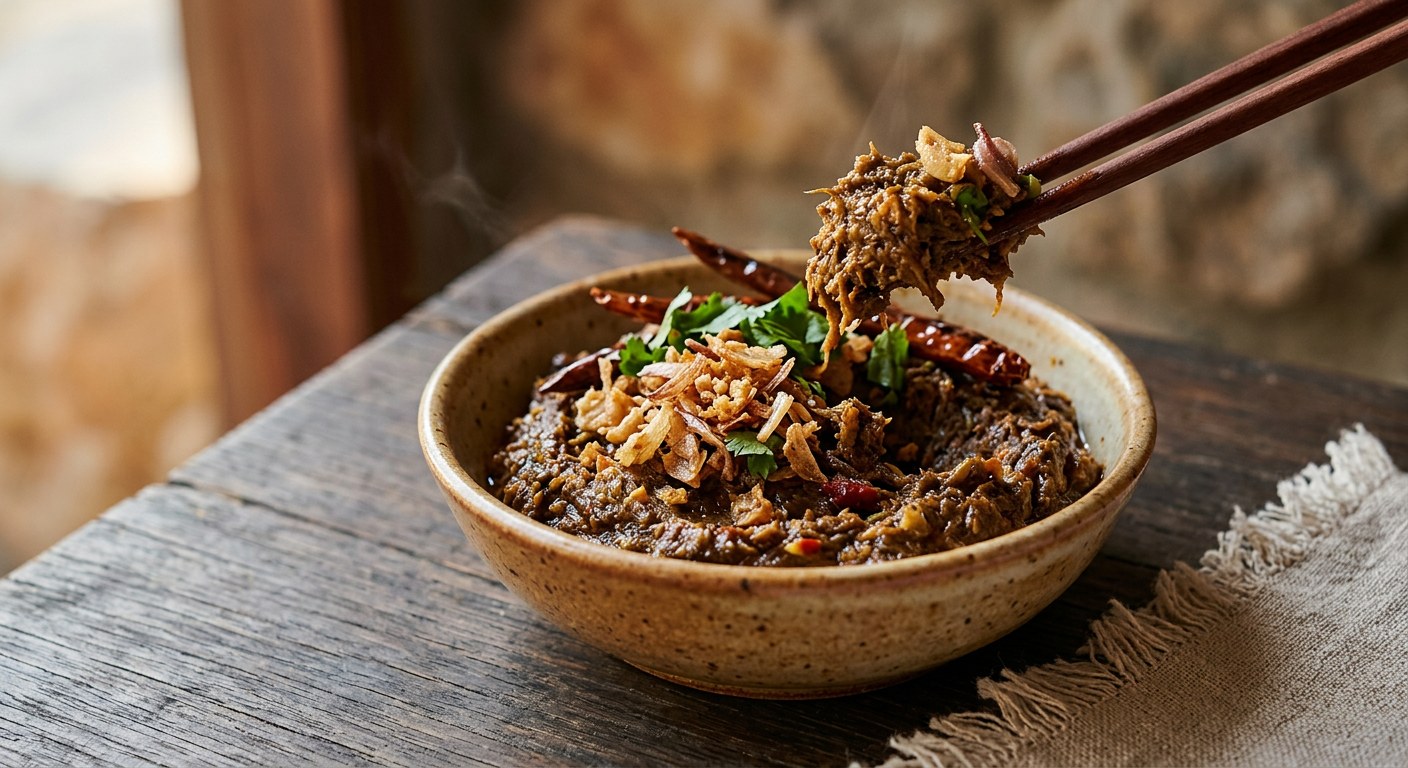
The north's galangal dip — roasted rhizome and dried chillies pounded fine, dry-fried into a hot, herbal paste that keeps for a month.
น้ำพริกข่า puts galangal where most Thai dips put fish or shrimp — as the body of the paste itself. Mature galangal, woody and fragrant, is sliced thin and dry-roasted in a pan over low heat until dry and aromatic, then pounded fine with roasted dried chillies, garlic and shallots. The finished paste is fried again until dry, which is what lets it sit in a jar for a month — longer refrigerated, as Kapook notes.
It is a northern Thai dip — Aroifin labels it สไตล์ล้านนา, Lanna style — and the classic pairings are northern too: Aroifin serves it with a plate of raw vegetables; TrueID's batch-cook version goes with หมูทอดแดดเดียว, sun-dried fried pork, and rice; another TrueID ratio recipe pairs it with จิ้นนิ่ง, steamed pork or beef, "the classic northern pairing". KRUA.CO's version, unique among the sources, adds lemongrass and ma-khwaen — the northern prickly ash — and serves it with boiled vegetables and boiled pig's ear.
The heat is deliberate. TrueID's batch recipe specifies large dried chillies, not bird's-eye — the burn should be middling and rounded, not sharp — and warns the paste is strong: a little goes a long way. Wongnai's น้องแปะก๊วย pairs it with steamed earthstar mushrooms, the seasonal northern delicacy. Some versions carry meat — minced chicken stir-fried in (Aroifin), minced pork (TrueID, Kapook's note) — and the meatless base stands on its own.
| Thai | English | Amount |
|---|---|---|
| ข่าแก่ซอยบาง | Mature galangal, thinly sliced | 200 g |
| กระเทียมซอยบาง | Garlic, thinly sliced | 10 cloves |
| หอมแดงซอยบาง | Shallots, thinly sliced | 5 heads |
| พริกแห้งย่างไฟหรือคั่ว | Dried chillies, grilled or roasted | 10–15 |
| เกลือเม็ด | Salt | 1 tsp |
| ผงปรุงรส | Seasoning powder (optional) | 1 tsp |
| น้ำมัน | Oil, for frying | as needed |
The pork version (TrueID): 30 large dried chillies, 3–5 heads mature galangal, 5–10 heads garlic, 1 tbsp salt, 2 tsp sugar, 2 tbsp MSG and 300 g minced pork — everything roasted, pounded, then fried in oil with the pork until cooked; made in batches that keep for weeks. The ratio recipe (TrueID): galangal, salt, shallots, dried chillies and garlic 1:1, shrimp paste half that — roasted, pounded, served with steamed pork. The lemongrass version (KRUA.CO): 5 large grilled dried chillies, 3 pieces mature galangal, 15 cloves garlic, 1 stalk lemongrass, 1 tsp ma-khwaen, ½ tsp sea salt.
The meat. None (Kapook's base, KRUA.CO's vegetarian paste, Wongnai's mushroom version), minced chicken stir-fried in before pounding (Aroifin), or minced pork fried into the paste (TrueID's batch recipe). All agree the meat is optional.
The roasting. Everything dry-roasted before pounding (Aroifin, TrueID, Wongnai), garlic and shallots deep-fried in oil instead (Kapook), or only the chillies grilled with the galangal left raw — the paste is dry-fried afterwards instead (KRUA.CO).
The extras. Lemongrass and ma-khwaen prickly ash (KRUA.CO alone), shrimp paste at half ratio (one TrueID recipe — "she adds it for the aroma", and notes some recipes skip it), sugar and MSG (TrueID's batch version), seasoning powder (Kapook, optional).
The double fry. Aroifin dry-fries the finished paste a second time; TrueID's batch version fries it with the pork. Kapook and KRUA.CO fry once. Every version that aims for shelf life fries the paste dry at the end.
The serve. Raw vegetables (Aroifin), boiled or steamed vegetables with boiled pig's ear (KRUA.CO), steamed earthstar mushrooms (Wongnai), sun-dried fried pork and rice (TrueID), steamed pork or beef จิ้นนิ่ง (the other TrueID).
This recipe is translated from the following Thai-language sources. Where they disagree, we've said so.
1. Kapook Cooking — "น้ำพริกข่า อาหารเหนือเผ็ดแซ่บหอมกลิ่นสมุนไพร" (the base recipe used here) — cooking.kapook.com
2. TrueID Food — "น้ำพริกข่า รสแซ่บ ทานได้กับหลายเมนู" (the batch pork version) — food.trueid.net
3. TrueID Food — "สูตรน้ำพริกข่า ทำตามง่ายมากแม่จ้า" (the ratio recipe with shrimp paste) — food.trueid.net
4. Aroifin — "วิธีทำ น้ำพริกข่า หอมกลิ่นสมุนไพร อร่อยลำขนาด สไตล์ล้านนา" (the Lanna chicken version with double roasting) — aroifin.com
5. KRUA.CO — "น้ำพริกข่า" (the lemongrass and ma-khwaen version) — krua.co
6. Wongnai — น้องแปะก๊วย, "วิธีทำ น้ำพริกข่าเห็ดถอบ เมนูอาหารเหนือทำง่าย ได้คุณค่าทางสารอาหาร" (the earthstar mushroom pairing) — wongnai.com