Recipe · Thailand · A Sweet Shop On A Mountain Of Snow

Nam Kang Sai (น้ำแข็งใส)

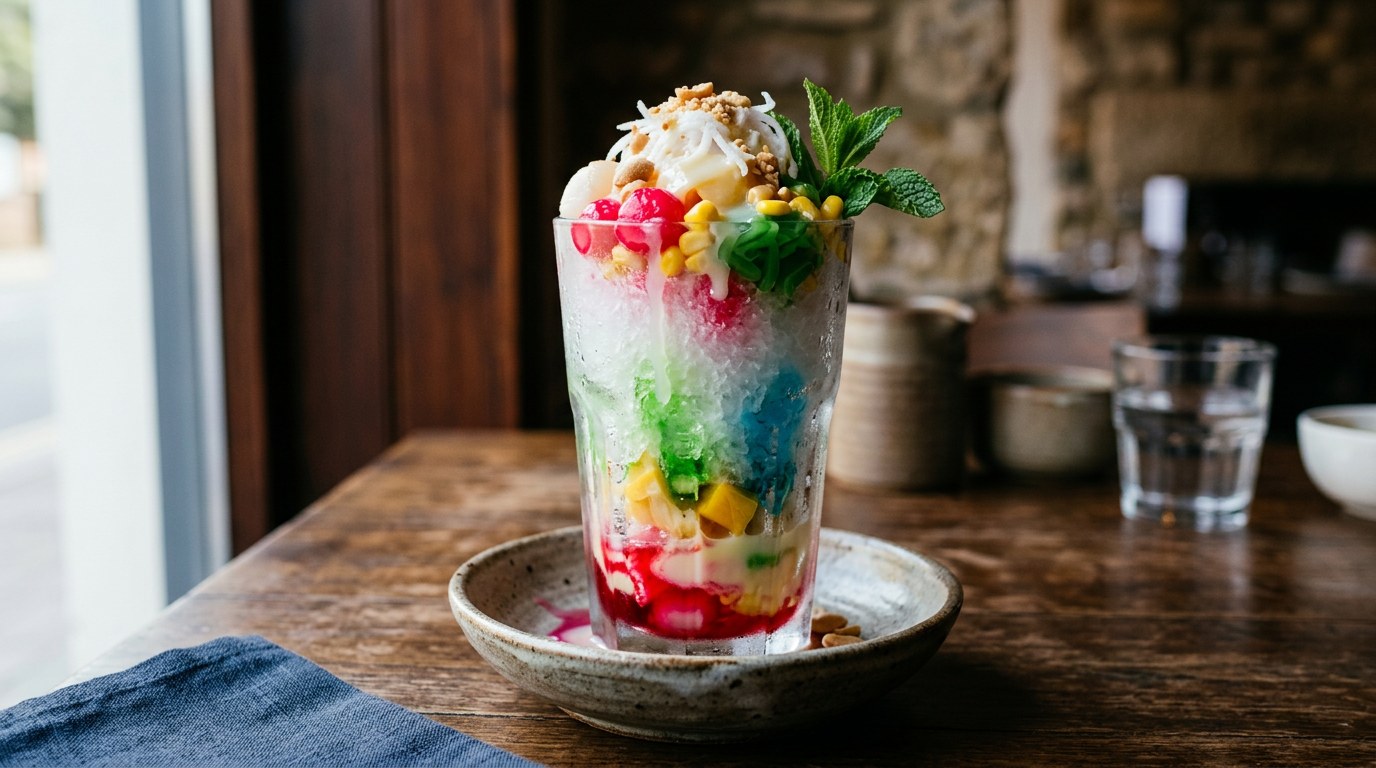
Fine shaved ice pressed into a mound, buried under red sala syrup, condensed milk and whatever the sweet counter has to offer — the dessert Thailand spells two ways and eats one way: immediately.

Nam Kang Sai (น้ำแข็งใส) — Thai Shaved Ice with Syrup and

The Sweet That Shaves Its Name

น้ำแข็งใส splits into น้ำแข็ง, ice, and ใส, "clear" — but that is not, strictly, its name. Thai Wikipedia and Thairath both point out the dessert should be written น้ำแข็งไส: ไส is the verb, to shave, the thing done to the block of ice. The menus of Thailand have voted the other way, and น้ำแข็งใส is what you will see on the cart. It goes by other names too — หวานเย็น (wan yen, "sweet cold") when the ice is mixed with other sweets such as lod chong, and จ้ำบ๊ะ (cham ba) for the classic of Phetchaburi and Khon Kaen.

Ice itself is an import. Silpa-Mag's account has it arriving from Singapore in the reign of Rama IV for the palace alone, before the Siam Ice Works made it ordinary; Thairath adds that King Rama V brought an ice-making machine back from Singapore after his 1871 state visit. What the Chinese cooks of Phetchaburi did with it was the invention that matters: leftover pa thong ko (fried dough) from the morning stall, fried crisp again, buried under a mound of shaved ice and red syrup. Condensed milk joined around 1947, when it became cheap and everywhere, and Wikipedia's layer-by-layer record of the finished bowl — fried dough or bread, then the ice mountain, then syrup, then the milk on top — is the same bowl that spread through Khon Kaen from about 1982.

The dish is a family. Silpa-Mag lines it up beside Japan's kakigori, Korea's bingsu, the Philippines' halo-halo, Malaysia's ais kacang and Vietnam's ching sam bo leung: every hot country that got ice invented its own mountain. Thailand's is the red one.
The Recipe (home version, from Thairath / TrueID)

ThaiEnglishAmount
น้ำแข็งไสIce, shaved or crushed fine1 block (~500 g)
ขนมปังBread, cut small, or fried dough sticks2 slices
น้ำแดงRed sala syrup2 tbsp
นมข้นหวานSweetened condensed milk2–3 tbsp
เฉาก๊วยGrass jelly, cubed100 g
ลูกชิดPalm seeds in syrup2 tbsp
รากบัวเชื่อมLotus root in syrup2 tbsp
มันเชื่อมSweet potato in syrup2 tbsp
วุ้นAgar jelly100 g
กะทิCoconut cream (optional)2 tbsp

The stall bowl (TrueID): grass jelly, palm seeds, syruped sweet potato and lotus root, fancy agar jelly — every topping shop-bought at 15 baht a bag — spooned into the cup first, crushed ice on top, red or green syrup, then milk, the whole cup costing 15–20 baht at a vendor. The old-style bowl (Wikipedia): fried pa thong ko or bread cubes as the base, the ice pressed into a mountain, syrup, condensed milk — or coconut cream floated with jasmine, or jackfruit in syrup. The breakfast bowl (Thairath): bread and cornflake cereal under the ice, red syrup and condensed milk over it, with fruit, yoghurt ice cream and almond milk as the "premium" upgrades.

The Method

  1. The snow. Shave a block of ice into fine flakes — a hand shaver if you have one, crushed ice from the freezer if not, and Thairath's home shortcut is a blender on pulse. The finer the snow, the more syrup it drinks.
  2. The base. Line the bowl with bread cubes or fried dough. This is the classic จ้ำบ๊ะ foundation — it soaks up the melt instead of leaving a puddle, and it is the only part of the dish with a bite to it.
  3. The mountain. Pack the ice over the base and press it into a dome or column. Vendors sell the volcano shape; the name จ้ำบ๊ะ is said to come from exactly that white mound.
  4. The toppings. Spoon grass jelly, palm seeds, lotus root, sweet potato and agar jelly around the mountain. Everything is interchangeable — TrueID's rule is simply: buy whatever the sweet counter has, spoon on as much as you like.
  5. The red. Pour the red syrup over the top so it runs down through the ice. Red first, then milk — the TrueID cook pours the milk last so the syrup has already soaked in.
  6. The finish. Drizzle the condensed milk over the crown (or coconut cream, for the old-style bowl) and eat immediately. Every source agrees on the last point: the mountain will not wait.

Where Thai Sources Disagree

The ice itself. Wikipedia describes a block shaved into fine flakes and pressed into a column; TrueID's stall version is built on crushed ice (น้ำแข็งบด); Thairath's home version lets a blender stand in for the shaver. The result runs the whole range from snow to slush — all three still call it the same dessert.

The base layer. Wikipedia's จ้ำบ๊ะ starts with fried dough or bread cubes under the ice, and Thairath lines the bowl with bread and cereal. TrueID's stall bowl has no base at all — toppings first, ice on top, nothing to catch the melt. Whether the bowl needs a foundation is the one structural argument the sources have.

Milk or coconut. Thairath and TrueID finish with condensed milk and nothing else. Wikipedia's classic version offers both — condensed milk, or coconut cream floated with jasmine. The condensed milk is the common ground; the coconut cream belongs to the older, sweeter-shop style of หวานเย็น.

How strict the layers are. Wikipedia records a fixed order — base, ice, syrup, milk. TrueID's vendor does toppings, ice, syrup, milk. Thairath does not much care what order anything goes in, as long as the milk ends on top. The milk on top is the one rule nobody breaks.

How Western Versions Get It Wrong

UK Ingredient Notes

Sources

This recipe is translated from the following Thai-language sources. Where they disagree, we've said so.

1. Thairath Lifestyle — "น้ำแข็งไส วิธีทำง่ายๆ เมนูคลายร้อนยอดฮิต" (the home method and topping bowls used here) — thairath.co.th

2. TrueID Food — "ชวนทำน้ำแข็งใสโบราณคลายร้อน" (the street-stall bowl, toppings and syrup order) — food.trueid.net

3. Thai Wikipedia — "น้ำแข็งไส" (the spelling, the names หวานเย็น and จ้ำบ๊ะ, and the history of the dish) — th.wikipedia.org

4. Silpa-Mag (ศิลปวัฒนธรรม) — "น้ำแข็งไส อาหารคลายร้อนนานาชาติ หลากวัฒนธรรม" by องค์ บรรจุน (the arrival of ice in Siam and the dessert's Asian family) — silpa-mag.com

5. Wongnai — "อาทิตย์เดือดยังต้องยอม! 10 ร้านน้ำแข็งไส ร้อนนี้ขอเบิลรัว ๆ" (the modern shaved-ice shop: snow texture, volcano bowls, syrup and topping choices) — wongnai.com

Johnny Tiger
Johnny researches and translates Thai recipes from Thai-language sources — chefs, restaurants and home cooks in Thailand — and publishes them with their sources cited. No westernised shortcuts, no invented steps.