Recipe · Thailand · Fried Rice With A Sour Edge

Khao Pad Naem (ข้าวผัดแหนม)

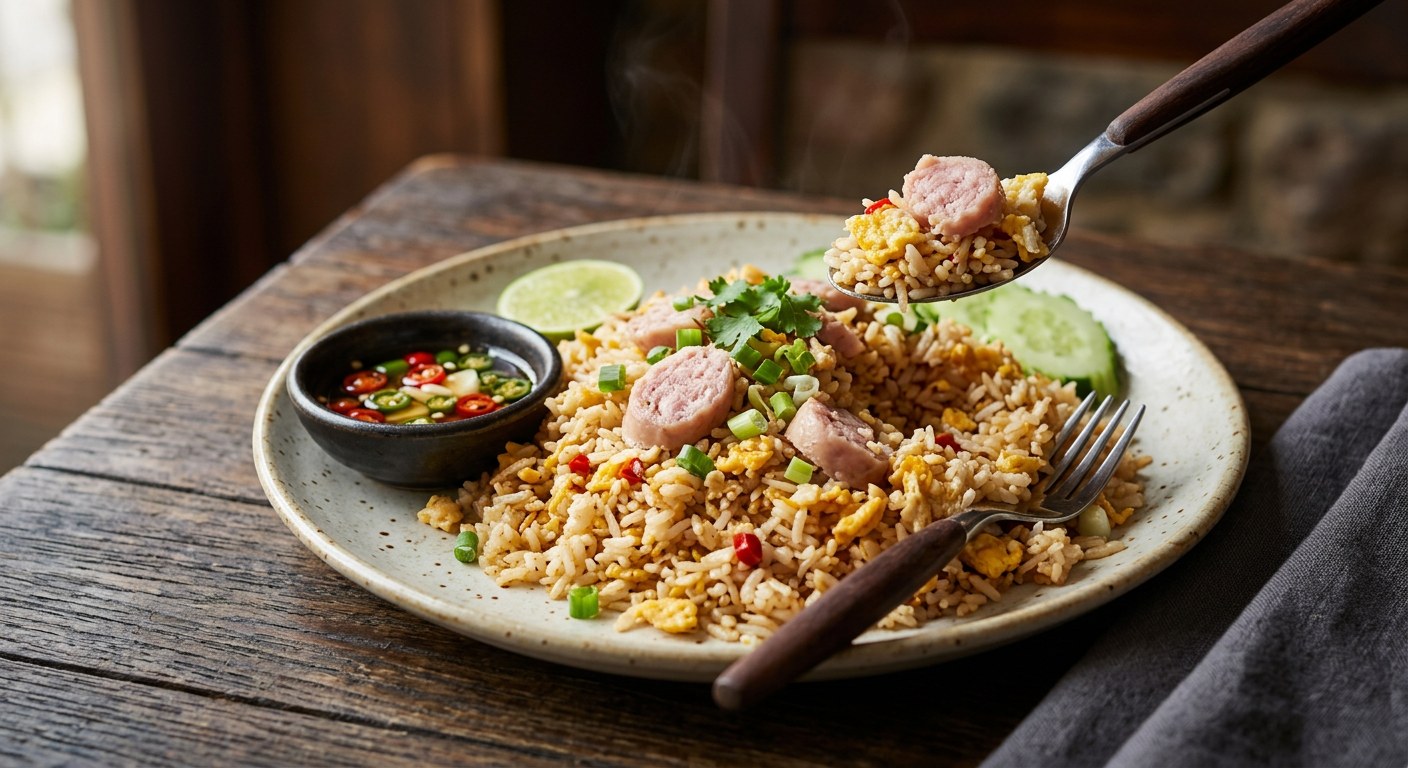
The fried rice Thailand orders when plain khao pad needs teeth — sour fermented pork sausage fried with garlic and egg, chilled rice tossed through, and prik nam pla on the side.

Khao Pad Naem — Fermented sour pork sausage fried with garlic, egg and chilled jasmine rice, seasoned with soy and oyster sauce

The Fried Rice That Bites Back

Khao pad naem starts where every other Thai fried rice starts — garlic, egg, day-old rice — and then it adds the ingredient that changes the register: naem, the northern-style fermented pork sausage with sticky rice and garlic, sour from its three or four days of lactic fermentation. The same sour, garlicky tang that makes naem a beer snack makes it a fried-rice protein, and the result is the one khao pad that needs no extra souring — the sourness is already inside the meat. Aroifin calls it รสจัดจ้าน เปรี้ยวนิด เผ็ดหน่อย: bold, a little sour, a little hot.

The details matter more than the ingredient list. Every Thai source agrees the rice must be chilled overnight — TrueID's writer spells out the reason: cold rice keeps the grains separate, เม็ดร่อนซุย, instead of clumping into a sticky mass. And Wongnai's cook fries the naem in hot water first — crumbled with a spatula in half a cup of boiling water until it dries and browns, and only then does any oil go in. The water does the breaking-up work the oil can't, and the naem fries instead of stewing.

Then there is the naem itself. TrueID's recipe draws the line that most Thai cooks know but rarely write down: naem korn, the compact block, gets fried before the rice so it cooks through; naem sen, the stringy shredded version, can join after the rice without turning to rubber. And the dish is finished the way all good khao pad is finished — with prik nam pla, bird's eye chillies in fish sauce with lime and shallot, the condiment Kapook's cook pairs with cold cucumber and a squeeze of lime over the top of the bowl.

The Recipe (home version, from TrueID)

ThaiEnglishAmount
ข้าวหอมมะลิ (แช่เย็น)Cooked jasmine rice, chilled3 cups
แหนม (ก้อน 50 กรัม)Naem, block, 50 g each3 sticks
ไข่ไก่Eggs2
กระเทียมสับGarlic, chopped1½ tbsp
น้ำมันสำหรับผัดOil for frying4 tbsp
ซีอิ๊วขาวLight soy sauce1 tbsp
ซอสหอยนางรมOyster sauce1 tbsp
น้ำตาลทรายSugar½ tbsp
น้ำมะนาวLime juice (if the naem isn't sour enough)½ tbsp
พริกไทยป่นGround white pepperto taste
ผักชีCoriander, for sprinkling1 cup
พริกขี้หนูซอยละเอียดBird's eye chillies, finely sliced (for prik nam pla)1 tbsp
น้ำปลา มะนาว หอมแดงFish sauce, lime, shallot (for prik nam pla)to taste

The water-fried batch (Wongnai, Nickktwf): 6 servings — jasmine rice chilled one night, 5 sticks naem (pork-chicken mix), ½ cup hot water, 2 tbsp vegetable oil, 1 head pounded garlic, 6 eggs, 1 tbsp pork seasoning powder, 1 tbsp sugar, seasoning sauce (green cap and Golden Mountain) to taste, sliced spring onion. The weighed batch (Aroifin): 1 serving — 200 g chilled rice, 150 g naem, 2 eggs, 30 g kailan tops, 30 g tomato, 4 garlic cloves, 3 tsp fish sauce, 1 tbsp oyster sauce, 2 tsp sugar; Aroifin also publishes per-serving nutrition: 1,120 kcal, 110 g carbs, 54 g fat, 40 g protein.

The Method

  1. Prep. Chop the naem into bite-size pieces and slice the garlic. Slice the bird's eye chillies and shallot for the prik nam pla before the wok gets hot — the fry is fast.
  2. The garlic. Heat the oil until very hot on a high flame, add the garlic and stir constantly so it doesn't burn. When it turns golden and fragrant, crack in the eggs — TrueID's order, and the garlic goes from raw to burnt in seconds.
  3. The eggs. Scramble with the tip of the spatula until white and yolk combine, then let them set a little. Kapook's cooks stop earlier — egg at about 70% — and let it finish cooking with the rice.
  4. The naem. Add the naem and fry. Block naem goes in now so it cooks through; if you have string naem, hold it until after the rice. Wongnai's alternative: skip the oil entirely at first, crumble the naem in half a cup of hot water and fry until the water dries and the meat browns, then add the oil.
  5. The rice. Add the chilled jasmine rice and toss. Cold rice is the whole trick — it keeps the grains separate and stops the fry turning to mush.
  6. The seasoning. Soy sauce, oyster sauce and a little sugar, tossed through. Aroifin swaps the soy for fish sauce; Kapook's cooks keep the seasoning so light you can still taste the naem's sourness.
  7. The finish. Off the heat, sprinkle the white pepper and scatter the coriander. Serve with prik nam pla on the side and, Kapook's way, cold cucumber and a lime wedge over the top.

Where Thai Sources Disagree

Water first or oil first. Wongnai's cook crumbles the naem in boiling water and fries it dry before any oil goes in — the water breaks the sausage apart, then the browning happens in fat. Every other source starts with oil and drops the naem straight into the hot fat. Wongnai's naem comes out drier and chewier; the oil-first naem stays softer and juicier.

When the naem goes in. TrueID fries the naem before the rice (and says string naem can wait until after); Kapook's second recipe adds naem and carrot together before the rice; Aroifin holds the naem until last, after the rice is already seasoned and coated with egg. The later it goes in, the less it dries out.

The egg. Kapook's Pantip recipe and Aroifin crack the eggs in after the rice and stir until the egg coats the grains — ไข่เคลือบข้าว, the golden-coat school. Wongnai, TrueID and Kapook's other recipe scramble the egg first and then add the rice. Same two eggs, visibly different rice.

Vegetables or not. Wongnai, TrueID and Kapook's big recipe use none beyond garnish. The other Kapook recipe and Aroifin add tomato, plus onion and carrot (Kapook) or kailan tops (Aroifin, which insists on the tender tips of kailan, not the fibrous stems).

The seasoning system. TrueID: soy + oyster + sugar. Aroifin: fish sauce + oyster + sugar. Wongnai: pork seasoning powder + sugar + two brands of seasoning sauce. Kapook: soy + seasoning powder + unrefined sugar. Five sources, five combinations — the only constant is something salty, something sweet.

The sourness fix. TrueID adds lime juice to the fry if the naem isn't sour enough; Kapook serves a lime wedge to squeeze at the table; everyone else trusts the naem to do the souring alone.
How Western Versions Get It Wrong

UK Ingredient Notes

Sources

This recipe is translated from the following Thai-language sources. Where they disagree, we've said so.

1. TrueID Food — "ข้าวผัดแหนม เมนูอร่อย งบน้อย ที่ทำได้ง่าย ๆ ไม่ยุ่งยาก.." (the recipe used here) — food.trueid.net

2. Wongnai — "สูตร ข้าวผัดแหนม พร้อมวิธีทำโดย Nickktwf" (the water-fried naem technique) — wongnai.com

3. Kapook Cooking — "ข้าวผัดแหนม เมนูคุ้ยตู้เย็น แม้เครื่องจะน้อยแต่ก็อิ่มและอร่อย" by คุณ Ananya Amy_1994 (cucumber-and-lime serve, light seasoning) — cooking.kapook.com

4. Kapook Cooking — "ข้าวผัดแหนม เมนูสุดง่ายกินอร่อยทำเองได้ทุกวัน" by คุณ NUTCHANART_CH (Pantip) (the butter and egg-coat version) — cooking.kapook.com

5. Aroifin (อร่อยฟิน) — "วิธีทำข้าวผัดแหนม รสจัดจ้าน เปรี้ยวนิด เผ็ดหน่อย อร่อยจนต้องเบิ้ล" (the weighed batch, kailan tops and nutrition) — aroifin.com

Johnny Tiger
Johnny researches and translates Thai recipes from Thai-language sources — chefs, restaurants and home cooks in Thailand — and publishes them with their sources cited. No westernised shortcuts, no invented steps.