Recipe · Thailand · The Dish Three Countries Claim

Khao Man Gai (ข้าวมันไก่)

Poached chicken rubbed in its own fat, rice stir-fried in that fat with ginger and garlic, and the tao jiao dipping sauce that makes it Thai. Three countries claim this dish — here's Thailand's version.

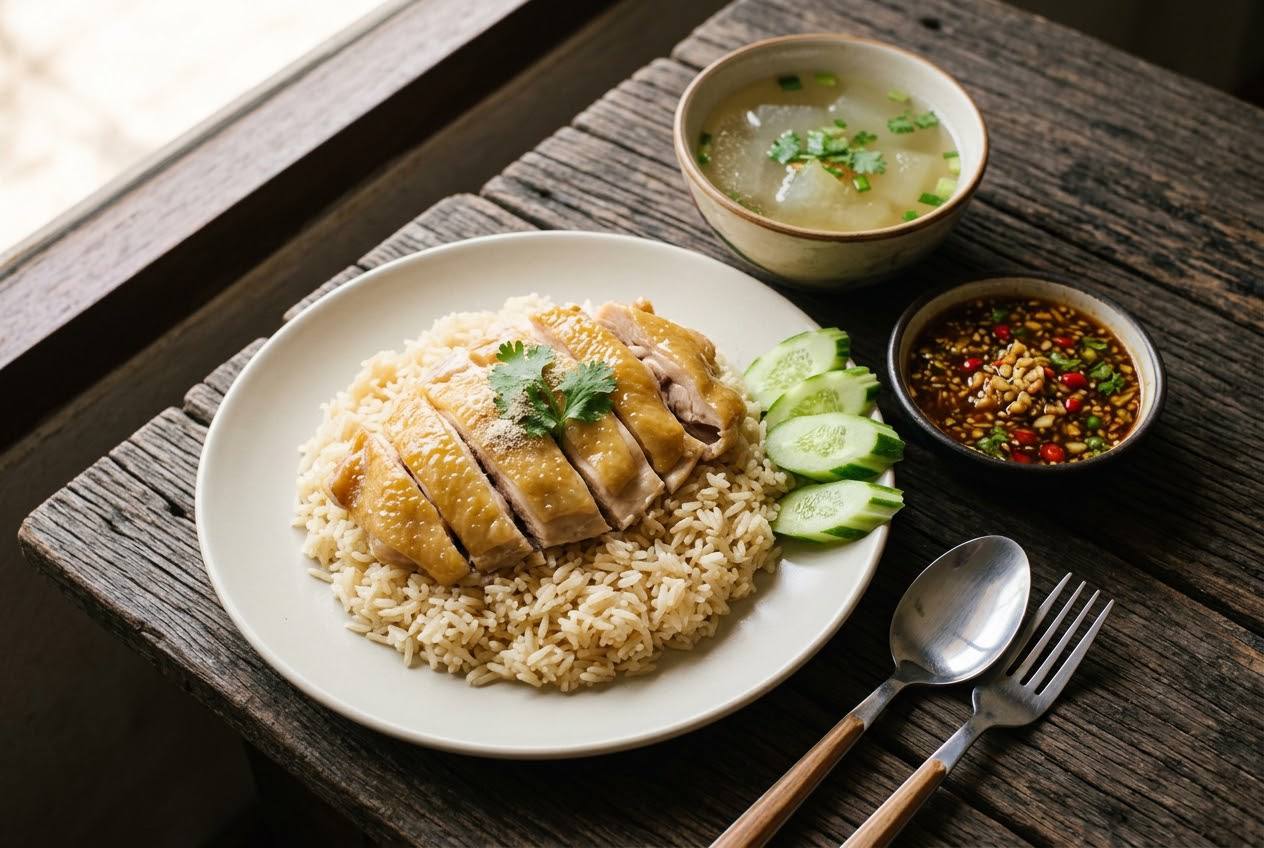
Khao man gai (ข้าวมันไก่) poached chicken over chicken-fat rice with tao jiao dipping sauce and winter melon soup

The Dish Three Countries Claim

Chicken rice began with the Wenchang chicken of Hainan, travelled with Chinese migrants, and became a national dish in three places — Hainan, Singapore and Thailand — each insisting theirs is the real one. Thailand's version is marked by two things: rice that's bolder (stir-fried in rendered chicken fat with ginger, garlic and coriander root before cooking in the chicken stock) and a dipping sauce built on tao jiao, fermented soybean paste — sweet, sour and salty in one spoon. The Singapore version skips it entirely.

The Michelin-starred chef Noom Thanintorn, who studied the dish obsessively, puts it plainly: "I studied chicken rice for a long time — each version has its signature, and sauces that might suit me or not. If I'm making chicken rice, why not make a version I like?" The recipe itself admits the dish is a family of variations. The Thai version below is the classic home one.

The Recipe (classic home method — serves 4–6)

The poach — ต้มไก่

ThaiEnglishAmount
ไก่สดWhole chicken1 (about 1.5 kg)
โครงไก่Chicken carcass (for the stock)1
รากผักชี (ทุบ)Coriander roots, bruised3–4
พริกไทยเม็ดPeppercorns1 tbsp
กระเทียม (ทุบ)Garlic, bruised1 tbsp
น้ำเปล่าWater4 litres
เกลือSalt1 tbsp
น้ำตาลทรายแดงBrown sugar2 tbsp
ซีอิ๊วขาวLight soy sauce2 tbsp

The rice — ข้าวมัน (for 4)

ThaiEnglishAmount
มันไก่Chicken fat, rendered~250 g raw fat, melted
ข้าวหอมมะลิJasmine rice, rinsed2 cups
น้ำซุปไก่Chicken stock (from the poach)500 ml
ขิง (ทุบพอแตก)Ginger, lightly bruised1 tbsp
กระเทียม (ทุบ)Garlic, bruised1 tbsp
รากผักชีCoriander roots2
เกลือSalt1 tsp
น้ำตาลทรายSugar1 tsp

The dipping sauce — น้ำจิ้มเต้าเจี้ยว

ThaiEnglishAmount
เต้าเจี้ยวTao jiao (fermented soybean paste)6 tbsp
ขิงGinger2 tbsp
กระเทียมGarlic2 tbsp
พริกFresh chillies2 tbsp
น้ำตาลทรายSugar5 tbsp
น้ำตาลมะพร้าวCoconut sugar2 tbsp
ซีอิ๊วดำหวานDark sweet soy½ tbsp
น้ำส้มสายชูRice vinegar8 tbsp
น้ำร้อนHot water3 tbsp
ฟักอ่อนWinter melon (for the soup)200 g
แตงกวาCucumber, to serve½, sliced

The Method

  1. Poach. Everything for the poach in a big pot with the chicken and carcass, water covering the bird. Boil, skim every trace of foam, then drop to the gentlest simmer — 45–60 minutes depending on size. Don't lift the chicken often; the skin tears and the breast dries.
  2. Render the fat. Chicken fat chopped and melted over low heat until golden. The fat is the soul of the dish — nothing gets thrown away.
  3. Rub the bird. Chicken out to drain, then rubbed all over with rendered fat mixed with salt. That's the shine, the seasoning, and what keeps it moist while it rests.
  4. Coat the rice. Ginger, garlic and coriander roots fried in some of the fat until fragrant; season with salt and sugar; rice in, stirred until every grain is coated in fat.
  5. Cook the rice in stock. Rice into the cooker or pot, hot chicken stock over, cook. When done, fold in more rendered fat and fluff with air — separate, glossy, springy grains.
  6. Blend the sauce. Everything blended fine — keep it on the salty side, then fold in extra crushed tao jiao and sliced ginger and chillies for texture. Sweet, sour and salty in one spoon.
  7. The soup. Winter melon simmered in the seasoned poaching broth until translucent. Plate the rice with sliced chicken, sauce on the side, cucumber, hot soup.

The Star-Chef Version (Chef Noom, Chim by Siam Wisdom, 1 Michelin star)

The chicken: brined overnight in water with coriander roots, cardamom, cloves, palm sugar, salt and Chinese white wine, then rolled and cooked sous-vide at 68°C for 25 minutes — or poached gently for the same result at home.

The rice: saffron added to the fat-fry with ginger, coriander root, shallots, pandan and lemongrass, then cooked in stock — his tribute to the Malay and Chinese versions.

His sauce: 120 g good tao jiao + 30 g miso, a syrup of 50 g sugar in 50 g water, 60 g rice vinegar, 30 g dark sweet soy, 50 g sliced chillies, 60 g minced old ginger, 30 g young ginger, 60 g minced garlic. That miso-and-tao-jiao pairing is the professional trick.
Hainanese vs Thai vs Singapore — Where They Split

Hainan: yellow, firmer skin from a turmeric bath, tighter-textured meat, simpler rice.

Singapore: the chilli-ginger-garlic sauce leads; rice is lighter and less seasoned; often no soy-based sauce at all.

Thailand: bolder rice (chicken fat + ginger + garlic + coriander root), the tao jiao sauce, plus the winter-melon soup and the blood-tofu cube on the side.

All three descend from the same Hainanese dish — the differences are documented, not debated away.

How Western Versions Get It Wrong

UK Ingredient Notes

Sources

This recipe is translated from the following Thai-language sources. Where they disagree, we've said so.

1. Michelin Guide Thailand (26 Nov 2021) — "สูตร 'ข้าวมันไก่เบญจาสูตรพิเศษ' ตำรับเชฟระดับร้านรางวัลดาวมิชลิน" (Chef Noom of Chim by Siam Wisdom) — guide.michelin.com

2. Pantip thread 39676309 — "วิธีทำข้าวมันไก่จากหม้อหุงข้าว พร้อมสูตรน้ำจิ้มและน้ำซุป" (classic home method, fully quantified) — pantip.com

3. Pantip thread 42659361 — "ข้าวมันไก่ไหหลำ ข้าวมันไก่สิงคโปร์ แตกต่างจากข้าวมันไก่ไทยยังไง" (the three-version comparison) — pantip.com

4. Kapook — "11 สูตรน้ำจิ้มข้าวมันไก่" (dipping-sauce variations) — cooking.kapook.com

Johnny Tiger
Johnny researches and translates Thai recipes from Thai-language sources — chefs, restaurants and home cooks in Thailand — and publishes them with their sources cited. No westernised shortcuts, no invented steps.