Recipe · Thailand · The Auspicious Cupcake
Khanom Thuai Fu (ขนมถ้วยฟู)
Yeast-leavened rice batter rested until frothy, steamed in tiny cups until the top cracks and flowers — the sweet Thais set out for luck.
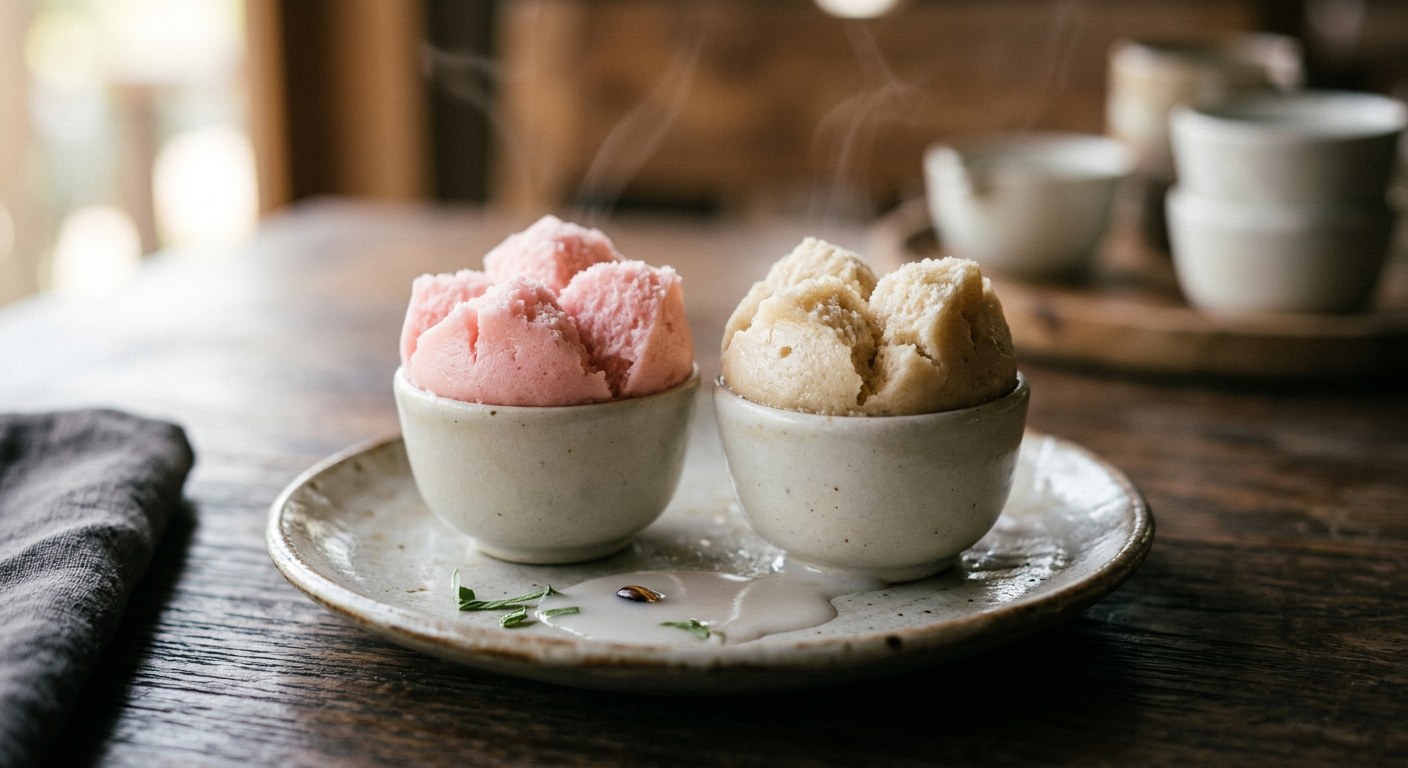
Yeast-leavened rice batter rested until frothy, steamed in tiny cups until the top cracks and flowers — the sweet Thais set out for luck.
ขนมถ้วยฟู is judged by its top: the batter rises in the steam until the surface cracks open like a flower — ฟู means to swell and prosper, which is why the little cups are stacked at weddings, housewarmings and shrine offerings. TrueID's article spells out the belief: the risen, flowering cake stands for เฟื่องฟู ความเจริญงอกงาม และความรุ่งเรือง — flourishing, growth and prosperity.
The rise is fermentation, not just baking powder. Every rice-flour version blends cooked jasmine rice into the batter — Kapook uses 160 g, Sangwun 120 g, one Wongnai home cook just 40 g in a small batch — then rests it under plastic wrap for two to three hours until the yeast works and the batter turns frothy. Aroimak notes the ancient version skipped baking powder entirely and used a fermented rice starter, a recipe its shop has sold for seventy years.
There is a naming split. Wongnai's home cook and Aroimak are explicit: ถ้วยฟู is built on rice flour — dense and chewy — while ปุยฝ้าย (cotton-fluff) is built on cake flour with eggs and SP emulsifier, light and airy. TrueID's recipe is titled ปุยฝ้าย "หรือขนมถ้วยฟู" — treating the two as one family, which is how most markets sell them: the same little cup, the same flowered top, a different bite.
| Thai | English | Amount |
|---|---|---|
| แป้งข้าวเจ้า | Rice flour | 420 g |
| ข้าวสวยหุงสุก | Cooked jasmine rice, blended smooth | 160 g |
| น้ำตาลทราย | Sugar | 340 g |
| ยีสต์ | Yeast | 1 tsp |
| ผงฟู | Baking powder | 4 tsp |
| น้ำเปล่า | Water | 670 g |
| กลิ่นมะลิ | Jasmine essence | 1 tsp |
| สีผสมอาหาร | Food colouring | as liked |
The small batch (Wongnai): 105 g rice flour, 40 g cooked jasmine rice, 85 g sugar, ¼ tsp yeast, 1 tsp baking powder, 200 g water, ¼ tsp jasmine essence. The shop batch (Sangwun, 68 cups): 315 g rice flour, 24 g arrowroot flour, 120 g cooked rice, 255 g sugar, ¾ tsp yeast, 1 tbsp baking powder, 500 g jasmine water. The fluffy cousin (TrueID, ปุยฝ้าย): 450 g cake flour, 2 tsp baking powder, 400 g sugar, 400 g cold water, 15 g SP, 2 eggs, ¼ tsp jasmine essence, 2 tsp lime juice — whipped, no fermentation.
The name. TrueID titles its recipe ปุยฝ้าย "หรือขนมถ้วยฟู" — one family, two names. Wongnai's home cook and Aroimak draw the line: ถ้วยฟู is the rice-flour cake, dense and chewy; ปุยฝ้าย is the cake-flour cake with eggs and SP, light and airy. Same cup, different bite.
The flour. Rice flour everywhere in the classic versions (Kapook 420 g, Sangwun 315 g, Wongnai 105 g, Aroimak 420 g), with Sangwun adding a 24 g arrowroot fraction for spring. TrueID's ปุยฝ้าย is the outlier: 450 g of cake flour, no rice at all.
The cooked rice. Every rice-flour version blends cooked jasmine rice into the batter for chew — 160 g (Kapook, Aroimak), 120 g (Sangwun), 40 g (Wongnai's small batch). The cake-flour version has none.
The leavening. Yeast plus baking powder in all rice versions, with ratios that swing wide — 1 tsp yeast + 4 tsp baking powder (Kapook, Aroimak), ¾ tsp + 1 tbsp (Sangwun), ¼ tsp + 1 tsp (Wongnai). TrueID uses only baking powder and SP. Aroimak records the ancient build: a fermented rice starter and no baking powder at all.
The steam. High heat, about 20 minutes (Kapook, Wongnai), medium-high for 12–15 minutes (Sangwun), or low heat for 15 minutes with a cloth-wrapped lid to stop drips (TrueID's ปุยฝ้าย). All agree the top must crack and flower.
This recipe is translated from the following Thai-language sources. Where they disagree, we've said so.
1. Kapook Cooking — "วิธีทำขนมถ้วยฟู" (the base recipe used here) — cooking.kapook.com
2. Aroimak — "ขนมถ้วยฟูโบราณ สูตรโบราณแท้ๆ" (the ancient starter version) — aroimak.co
3. Sangwun (ร่มสูด) — "ขนมถ้วยฟู" (the 68-cup shop batch) — sangwun.romsood.com
4. Wongnai — home cook recipe (the small batch and the ถ้วยฟู/ปุยฝ้าย distinction) — wongnai.com
5. TrueID Food — "สูตรขนมปุยฝ้าย หรือขนมถ้วยฟู" by ครูตุ้ม (the cake-flour cousin) — food.trueid.net