Recipe · Thailand · Desserts · The Layered Pudding In A Leaf Cup

Khanom Tako (ขนมตะโก้)

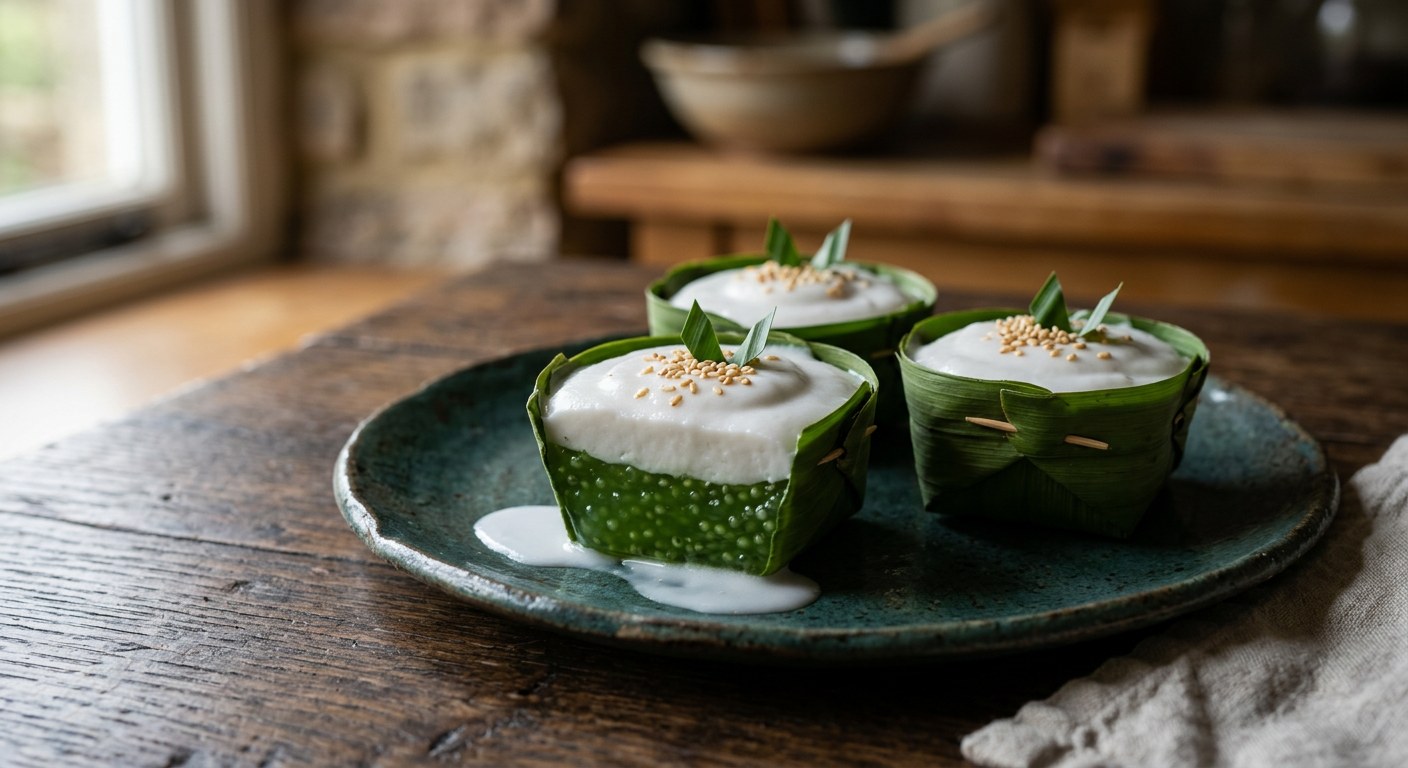
A pandan-scented rice-flour pudding with diced water chestnuts, set in a small banana-leaf cup and finished with a salty coconut cream that settles on top — sweet below, savoury-sweet above, eaten with a teaspoon.

Khanom Tako (ขนมตะโก้) — Layered Pandan and Coconut Pudding in Banana Leaf

The Pudding That Arrives In Its Own Cup

ขนมตะโก้ (khanom tako) is a two-layer dessert: a sweet starch base — scented, studded with a filling — set in a small cup woven from banana leaf, with a salty-sweet coconut cream poured over it that firms into a distinct top layer. You eat it straight from the cup with a teaspoon, and the leaf cup is part of the point: unwrap the bottom, and the whole thing comes out clean.

Aroifin's explainer sorts the family into two classic kinds. ตะโก้ถั่ว is the old mung-bean version — hulled mung beans ground fine and stirred with sugar and coconut milk until the paste is thick enough to cut into squares. ตะโก้แป้งข้าวเจ้า is the two-layer rice-flour version sold at markets today, the one most people mean by the name: a rice-flour body with a coconut top that carries just enough salt to sharpen it.

The scent is where tradition and fashion diverge. The old way, as Aroifin records, scented the body with flower water — jasmine floated in water overnight — or the even older trick of ควันเทียน, a lit candle held under a lid so the smoke perfumes the starch. Pandan, which Wongnai's recipe uses, is the modern favourite: greener, easier, and it dyes the base as it scents it. The filling changes with the maker — water chestnut is the classic, corn, young coconut, taro and longan all common.
The Recipe (pandan water-chestnut version, from Wongnai)

ThaiEnglishAmount
แป้งข้าวเจ้าRice flour2 cups
แป้งมันTapioca starch4 tbsp
น้ำใบเตยPandan water (blended leaves, strained)2 cups
น้ำเปล่าWater2 cups
น้ำตาลทรายGranulated sugar⅔ cup
แห้ว (กระป๋อง)Water chestnuts, diced (canned is fine)1 can
กะทิCoconut milk (for the topping)2 cups
น้ำตาลทรายSugar (for the topping)1 tbsp
เกลือป่นSalt (for the topping)2 tsp

The classic mung-bean version (EzyThai): 1 cup mung bean starch, 3 cups jasmine-scented water, 2 cups sugar, ½ cup pandan juice and ½ cup boiled diced water chestnuts stirred over medium heat until thick — topped with ½ cup rice flour, 2 cups coconut milk and 1 tsp salt. The steamed version (Aroifin): rice flour, jasmine water and sugar stirred, poured into banana-leaf cups half-full, a piece of chestnut added, steamed about 15 minutes until set, then the cooked coconut cream poured over. The sago version (The Asianparent): small sago pearls boiled in pandan water with sugar and steamed hulled mung beans, with a coconut-milk and rice-flour top.

The Method

  1. The pandan water. Wash the pandan leaves, chop them roughly and blend with water, then strain out the fibre. Wongnai's cook keeps it simple: pandan in, water out, nothing else.
  2. The starch mix. Combine the rice flour, tapioca starch and sugar in a bowl, then whisk in the pandan water and the plain water. Strain the mixture before it meets the heat — every source strains, because a lump at this stage stays a lump in the finished pudding.
  3. The stir. Set the mixture over the heat and stir without stopping until it thickens and turns gluey. Then stir in the diced water chestnuts and keep going until the whole mass is thick enough to hold its shape.
  4. The cups. Ladle the hot base into small banana-leaf cups — or small moulds — filling each about halfway. The base sets as it cools, so work while it is still fluid.
  5. The topping. Warm the coconut milk with the sugar and salt over low heat, stirring, only until it thickens slightly. Aroifin's warning applies here: this layer should stay thin enough to pour — it firms as it cools, not in the pot.
  6. The finish. Spoon the topping over the base in each cup and leave the cups to set. Garnish with a small dice of chestnut on top if you like. Serve at room temperature or chilled; the two layers should stay visibly separate.

Where Thai Sources Disagree

The starch. Wongnai builds the base from rice flour plus tapioca starch; EzyThai uses mung bean starch alone (the old ตะโก้ถั่ว way); Aroifin uses rice flour on its own; The Asianparent boils small sago pearls instead of a flour. Aroifin's background note says the rice-flour two-layer version is what is sold today, and even adds that some makers swap in cornflour — so the base is the one ingredient no two sources agree on.

The scent. EzyThai scents the body with jasmine water (น้ำกลิ่นมะลิ); Aroifin floats real jasmine in water overnight and records the candle-smoke trick (ควันเทียน) as the old method; Wongnai uses pandan water, which Aroifin describes as the modern preference. Same dessert, three generations of perfume.

How the base cooks. Wongnai, EzyThai and The Asianparent all stir the starch over heat in a pot until thick, then ladle it into cups. Aroifin instead pours the raw mixture into banana-leaf cups and steams it for about fifteen minutes until it sets, then pours the coconut on top. Both give a firm base; the steamed one keeps the mixture's pale colour, the stirred one runs glossier.

Sugar in the topping. EzyThai and Aroifin season the coconut layer with salt only — the sweetness belongs to the base, the salt to the top. Wongnai and The Asianparent add a spoonful of sugar to the coconut as well. The salt is the one thing nobody skips: that edge of salt against the sweet pudding is what the whole dessert balances on.

How Western Versions Get It Wrong

UK Ingredient Notes

Sources

This recipe is translated from the following Thai-language sources. Where they disagree, we've said so.

1. Wongnai — "สูตร ตะโก้แห้วใบเตย" by นาง สุประวีณ์ รัตนะ (the pandan water-chestnut recipe used here) — wongnai.com

2. Aroifin — "วิธีทำ ตะโก้ ขนมไทยแสนอร่อย หวานมันกะทิแบบจัดเต็ม" (the steamed banana-leaf-cup version; the two classic types explained) — aroifin.com

3. Ezy Thai Cooking — "สูตรขนมไทย: ขนมตะโก้" (the classic mung-bean and jasmine-water version) — ezythaicooking.com

4. The Asianparent Thailand — "5 ตะโก้ เมนูขนมไทยโบราณ ทำง่าย อร่อย หวานมัน กะทิจัดเต็ม หลายไส้" (five fillings including sago-longan and taro; the three-flour background) — th.theasianparent.com

Johnny Tiger
Johnny researches and translates Thai recipes from Thai-language sources — chefs, restaurants and home cooks in Thailand — and publishes them with their sources cited. No westernised shortcuts, no invented steps.