Recipe · Thailand · The Pancakes of the Sizzling Pan

Kanom Krok (ขนมครก)

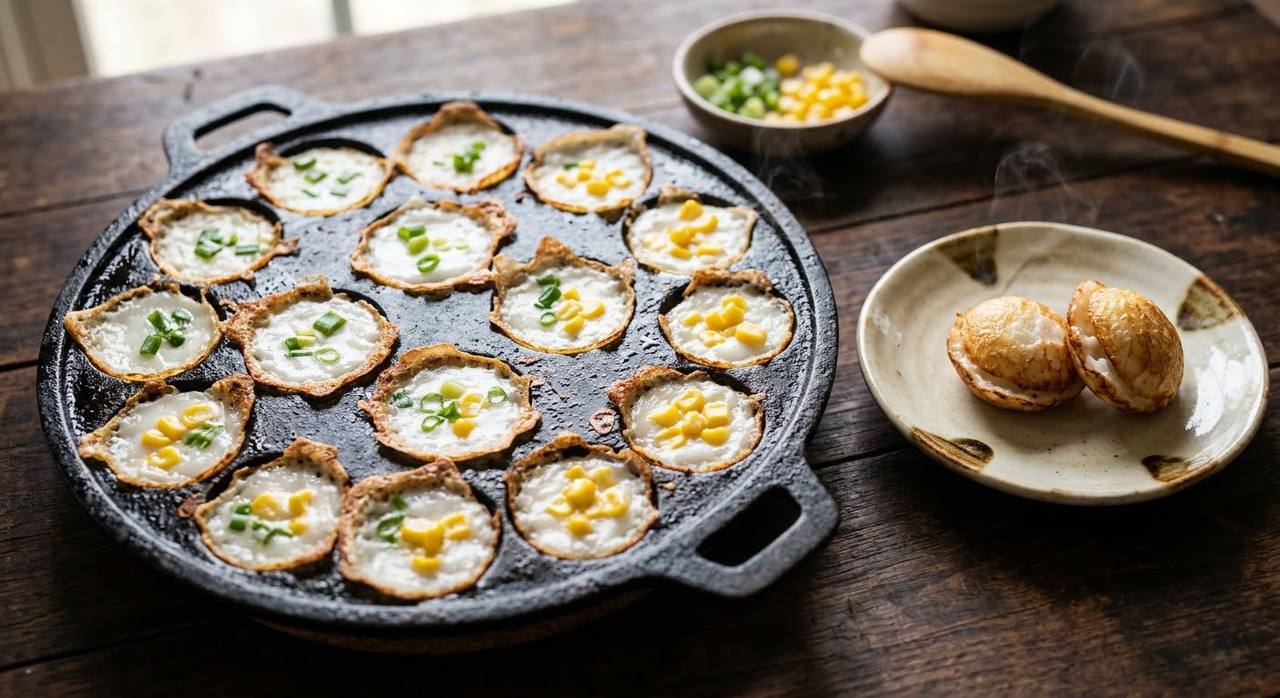
The market's coconut pancakes: rice-flour batter in the wells of a sizzling pan, coconut cream poured on top, spring onion and corn scattered in — crisp shell, soft custard heart, eaten hot.

Kanom krok (ขนมครก) coconut pancakes in a cast pan with spring onion and corn toppings

The Pancakes of the Sizzling Pan

The name is the pan: ขนมครก — ครก being the mortar, and the cooking pan looks like one: a round plate of shallow wells over a charcoal or gas fire. Every Thai market has a stall working one, the vendor pouring batter outside-in, topping each well with coconut cream, scattering spring onion and corn, and flipping the finished half-cups together two by two. The whole thing hisses and smells of coconut.

The texture is the entire point: crisp at the rim, custard in the middle. Two quiet tricks earn it — a scoop of cooked jasmine rice blended into the batter for the soft heart, and clear lime water for the crisp edge. The traditional recipe below uses both; the sources argue about everything else.

Fillings are where vendors show off. The plain coconut version is the classic; spring onion is the savoury standard; corn and taro the sweet-loaded ones; and the palace version — ขนมครกชาววัง — piles on golden threads, raisins, pumpkin and more. The pan doesn't judge; it just cooks.

The Recipe (traditional version — serves 4, about 30 pieces)

ThaiEnglishAmount
The batter
แป้งข้าวเจ้าRice flour250 g
ข้าวหอมมะลิหุงสุกCooked jasmine rice100 g
น้ำปูนใสClear lime water — or plain water120 g
หัวกะทิคั้นสดHead coconut milk, freshly pressed500 ml
หางกะทิThin coconut milk250 ml
น้ำตาลทรายSugar60 g
เกลือสมุทรSea salt2 tsp
The coconut topping
หัวกะทิคั้นสดHead coconut milk, freshly pressed500 ml
น้ำตาลทรายSugar — 70 g if you like it less sweet80 g
เกลือสมุทรSea salt¾ tsp
แป้งข้าวเจ้าRice flour — to thicken the topping1½ tbsp
Fillings and pan
ข้าวโพด · เผือก · ต้นหอมSweet corn, taro, spring onion — fillingsas liked
น้ำมันพืชVegetable oil — for wiping the wellsas needed

The Method

  1. Fillings. Corn sliced thin, taro diced — both steamed until cooked, about 20 minutes. Spring onions sliced.
  2. Batter. Rice flour, cooked jasmine rice, lime water, both coconut milks, sugar and salt blended smooth. Rest 30 minutes — the flour needs it.
  3. Topping. Head coconut milk, sugar, salt and the rice flour whisked until dissolved.
  4. Jugs. Both mixtures into narrow-spout pouring jugs — the pour is the technique.
  5. The pan. Kanom krok pan over low heat until properly hot, then wipe the wells with an oiled cloth. (A new pan: wash it three times with detergent, then season it with oil over heat for 30 minutes.)
  6. Pour. Batter first, outside-in around the pan — then the coconut topping over each well immediately, so the two layers set as one.
  7. Fill and cover. Spring onion in straight away; corn and taro once the batter starts to set. Lid on, about 5 minutes.
  8. Lift. When the outer edges turn golden-brown, scoop each out with a spoon. Serve warm — two halves pressed together is the street way.

Where Thai Sources Disagree

The cooked rice. TrueID blends cooked jasmine rice into the batter for the soft heart; the Pantip recipe keeps the batter plain rice flour. Both publish; the rice version is the custard-soft one.

Lime water. TrueID uses it for the crisp edge and says plain water works in a pinch; the Pantip recipe uses plain water from the start. The crispness is the argument.

The flour. Wongnai's palace version adds plain flour and baking powder for an extra-crisp shell; the traditional batter is rice flour alone. Both exist under one name.

Sweetener. White sugar in the everyday recipes, palm sugar in Wongnai's — the palm version tastes deeper and slightly caramel.

The topping. Thickened with a spoon of rice flour (TrueID, Pantip) or poured plain (Wongnai). The flour keeps the cream from separating in the wells.

Fillings. Plain and proud, or loaded — spring onion, corn, taro, pumpkin, sesame, golden threads. The vendors argue with their pans.
How Western Versions Get It Wrong

UK Ingredient Notes

Sources

This recipe is translated from the following Thai-language sources. Where they disagree, we've said so.

1. TrueID — "วิธีทำ ขนมครก สูตรโบราณ เมนูสร้างอาชีพ กรอบนอกนุ่มใน หวานมันอร่อย!" (the traditional batter with cooked rice and lime water, full method and pan technique) — food.trueid.net

2. Pantip thread 40260607 — "แจกสูตร ขนมครก ที่ทำง่ายที่สุด และอร่อยถูกใจ" (the plain rice-flour batter and simple coconut topping) — pantip.com

3. Wongnai — "วิธีทำ เมนู ขนมครก เมนูของหวานชาววัง เครื่องปังอลังเวอร์!" (the palace version with plain flour and baking powder, and the loaded fillings list) — wongnai.com

Johnny Tiger
Johnny researches and translates Thai recipes from Thai-language sources — chefs, restaurants and home cooks in Thailand — and publishes them with their sources cited. No westernised shortcuts, no invented steps.