Recipe · Thailand · The Breakfast That Arrives In Its Own Pan

Kai Kratha (ไข่กระทะ)

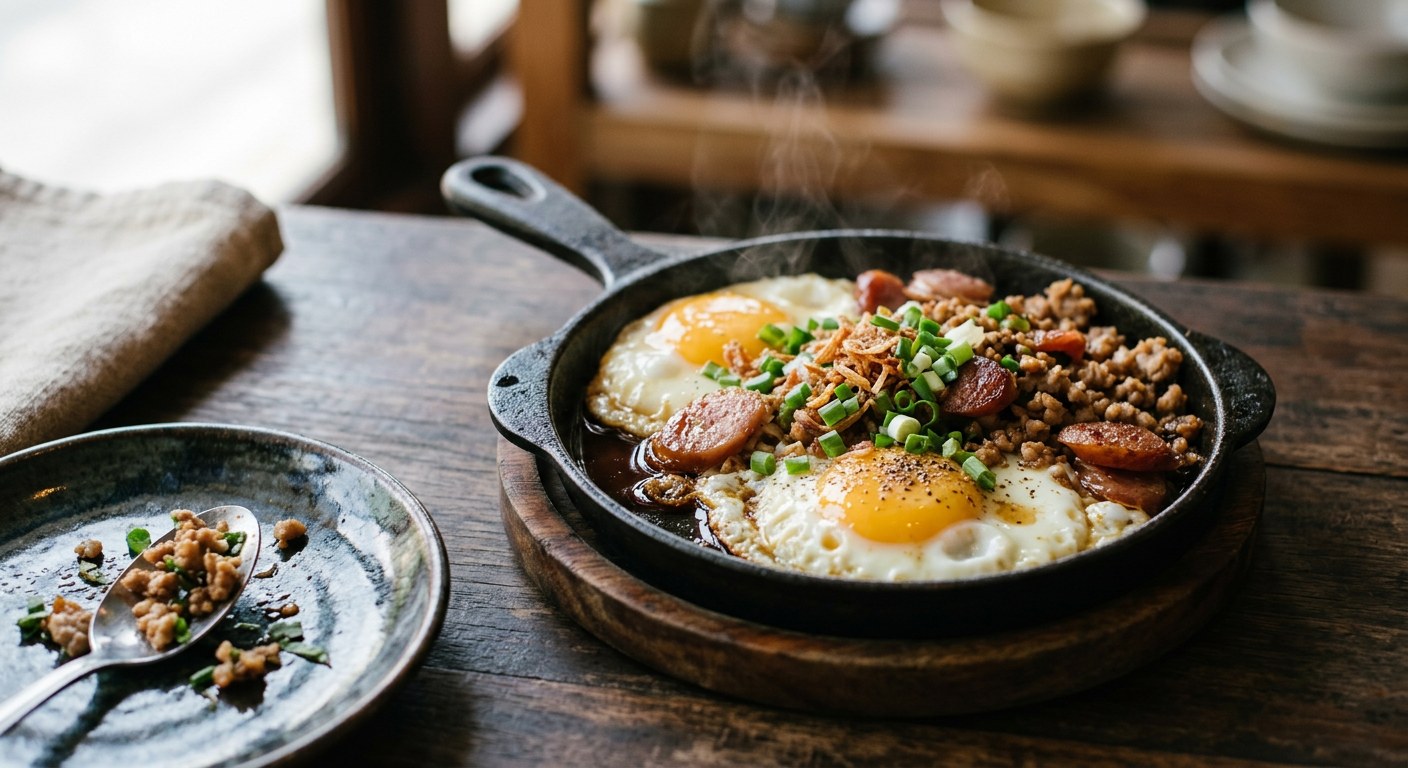
Two eggs cracked into a small buttered pan, loaded with seasoned minced pork, Chinese sausage and Vietnamese sausage, steamed under a lid — then set down sizzling with a baguette and a dash of seasoning sauce. The northeast's answer to breakfast.

Kai Kratha — Isaan pan-fried eggs with minced pork, Chinese sausage and Vietnamese sausage, served in a small pan

The Breakfast That Names Its Own Pan

The name is the whole dish: ไข่ (kai), egg — and กระทะ (krata), pan. The pan is not a serving gimmick. It is the cooking vessel, the plate and the reason the eggs arrive at the table still hissing in butter, and the dish is defined as much by it as by what sits on top of the eggs.

The dish is an Isaan institution, but its family tree points east. The old Thai sources tell the same story: kai kratha came to the northeast with the Vietnamese food culture that followed French Indochina — bloggang's coffeebake spells it out, tracing the dish to Vietnam's breakfast shops and the baguette (บาแกต) that still rides along with it. It settled into the morning menus of Udon Thani and Khon Kaen, where breakfast shops keep it on the menu next to Vietnamese-style stuffed bread, boiled eggs and thick sweet coffee.

And the toppings are the fun of it. The classic pan, as Wongnai's writers themselves note, is the one loaded with หมูยอ (Vietnamese pork sausage), กุนเชียง (sweet Chinese sausage) and หมูสับ (seasoned minced pork). Kapook's four-style roundup takes it further — prawns, ham, pork sausage, shiitake, tomato — while Wongnai's own recipe goes full American with bacon, ham and bologna. The dish is a frame: what the shop (or your fridge) has goes in it.

The Recipe (home version, from Phol Food Mafia HOME COOKED)

ThaiEnglishAmount
รากผักชีCoriander root1
กระเทียมGarlic1 clove
พริกไทยWhite peppercorns3
เนยจืดUnsalted butter1½ tbsp
หมูบดMinced pork80 g
ซีอิ๊วขาวLight soy sauceto taste
พริกหวานหั่นเต๋าSweet pepper, diced¼ cup
ไข่ไก่Eggs2
หมูยอVietnamese pork sausage, sliced1 tbsp
กุนเชียงChinese sausage, sliced1 tbsp
หมูหยองPork floss1 tbsp
ต้นหอมซอยSpring onion, slicedfor serving
พริกไทยขาวป่นGround white pepperfor serving
ซอสปรุงรสSeasoning sauce (Maggi / Golden Mountain)for serving

The traditional pan (Bloggang, coffeebake): the same trio, but the pork is cooked with soy sauce, oyster sauce, a spoon of water and ½ tsp sugar; the Vietnamese sausage is halved and fried golden, the Chinese sausage fried slowly in low-hot oil, and everything goes into the pan together with 1 tbsp butter and 2 eggs, covered for 2.30–3.30 minutes. The loaded pan (Kapook): minced pork stir-fried with onion (prawns optional, oyster sauce + light soy + pepper), kun chiang boiled first then fried, then butter, 2 eggs, and pork, sausage, ham and moo yor pressed into the whites — served with chilli sauce, tomato sauce or seasoning sauce. The American pan (Wongnai): bacon, ham, sausage and bologna fried in butter first, pushed aside, eggs cracked in, tomato and spring onion on top — 320 kcal a serving.

The Method

  1. The pork. Pound the coriander root, garlic and peppercorns (สามเกลอ — the three friends) and fry them in half a tablespoon of butter until fragrant. Add the minced pork, season with light soy sauce, and stir-fry until cooked. Set aside. Kapook's version swaps the three friends for diced onion and adds oyster sauce; coffeebake adds a spoon of water and half a teaspoon of sugar so the pork stays soft rather than seared.
  2. The sausages. Slice the Chinese sausage and Vietnamese sausage. Fry the kun chiang gently in low-hot oil until golden — coffeebake stresses low heat, since the sausage's sugar burns — and fry the moo yor until golden on the cut sides. Kapook boils the kun chiang first, then fries it. Either way, the sausages are fully cooked and coloured before they ever meet the eggs.
  3. The pan. Melt the remaining butter in a small individual pan over low heat and swirl it over the whole surface — every source's anti-stick trick, and the reason the eggs slide out whole.
  4. The eggs. Crack two eggs into the pan, then arrange the pork, sweet pepper and both sausages on top of the whites, pressing them in lightly so they set into the eggs rather than sitting loose on them.
  5. The steam. Cover the pan and let the trapped steam set the whites — coffeebake times it at 2.30–3.30 minutes, Kapook and Phol Food Mafia simply say until the eggs are done the way you like them. The yolk should still be runny; that is what the baguette is for.
  6. The table. Off the heat: sprinkle pork floss and sliced spring onion, and set the pan down as-is with ground white pepper and a bottle of seasoning sauce beside it. Eat from the pan with buttered baguette — the Vietnamese inheritance — and a glass of Thai-style coffee.

Where Thai Sources Disagree

The topping set. The classic trio is minced pork, kun chiang and moo yor (Phol Food Mafia, coffeebake). Kapook's first recipe loads the pan further — ham, pork sausage, and prawns if you have them — and its second recipe goes the other way, almost vegetarian-leaning with shiitake and tomato. Wongnai keeps bacon, ham, sausage and bologna for its self-described American-style pan. Wongnai's own intro concedes the familiar Thai version is the one with moo yor, kun chiang and minced pork.

The kun chiang. Kapook boils the Chinese sausage, drains it, then fries it. coffeebake skips the boil and fries it slowly in low-hot oil, warning that the sausage's sugar burns fast. Both agree on one thing: it is pre-cooked and coloured before it reaches the eggs.

The seasoned pork. Phol Food Mafia builds it on pounded coriander root, garlic and peppercorns with light soy only. Kapook builds it on onion with oyster sauce, light soy and pepper — sugar optional, "if you like it sweet". coffeebake uses soy and oyster sauce with water and half a teaspoon of sugar so the meat cooks soft instead of searing. Three shops, three porks — all stir-fried dry and set aside before the eggs go in.

Egg doneness. coffeebake gives an exact lid time: 2.30–3.30 minutes. Kapook and Phol Food Mafia refuse to time it — "until done the way you like" — since the runny-to-set spectrum is personal. Nobody disputes the technique itself: lid on, steam sets the whites, yolk stays soft.

What to serve with it. coffeebake is strict: the pan comes with a steamed, buttered baguette. Kapook is looser — bread or coffee, with chilli sauce, tomato sauce or seasoning sauce on the table. Phol Food Mafia ends on seasoning sauce and white pepper. The baguette is the common thread that ties the dish back to its Vietnamese origins.
How Western Versions Get It Wrong

UK Ingredient Notes

Sources

This recipe is translated from the following Thai-language sources. Where they disagree, we've said so.

1. Phol Food Mafia — "Skillet Egg (ไข่กระทะ)" by Nakul Kavinrat, HOME COOKED, 7 July 2024 (the recipe used here) — pholfoodmafia.com

2. Kapook Cooking — "4 สูตรไข่กระทะ อาหารเช้าเมนูไข่เพิ่มพลัง ระวังกินหมดแบบไม่ตั้งตัว" (the four-style roundup; the loaded pan with prawns and ham) — cooking.kapook.com

3. Bloggang — "ไข่กระทะ สูตรดั้งเดิม (Fried Egg with Pork and Sausage)" by coffeebake (the traditional recipe; the Vietnamese-origin story; exact lid timing) — bloggang.com

4. Wongnai — "วิธีทำ 'ไข่กระทะ' เมนูไข่สไตล์อเมริกัน ทำง่าย อิ่มท้องพร้อมสู้งาน!" (the American-style pan; the note that the familiar Thai version carries moo yor, kun chiang and minced pork) — wongnai.com

Johnny Tiger
Johnny researches and translates Thai recipes from Thai-language sources — chefs, restaurants and home cooks in Thailand — and publishes them with their sources cited. No westernised shortcuts, no invented steps.