Recipe · Thailand · The Crisp-Edged Pancake

Hoy Tod (หอยทอด)

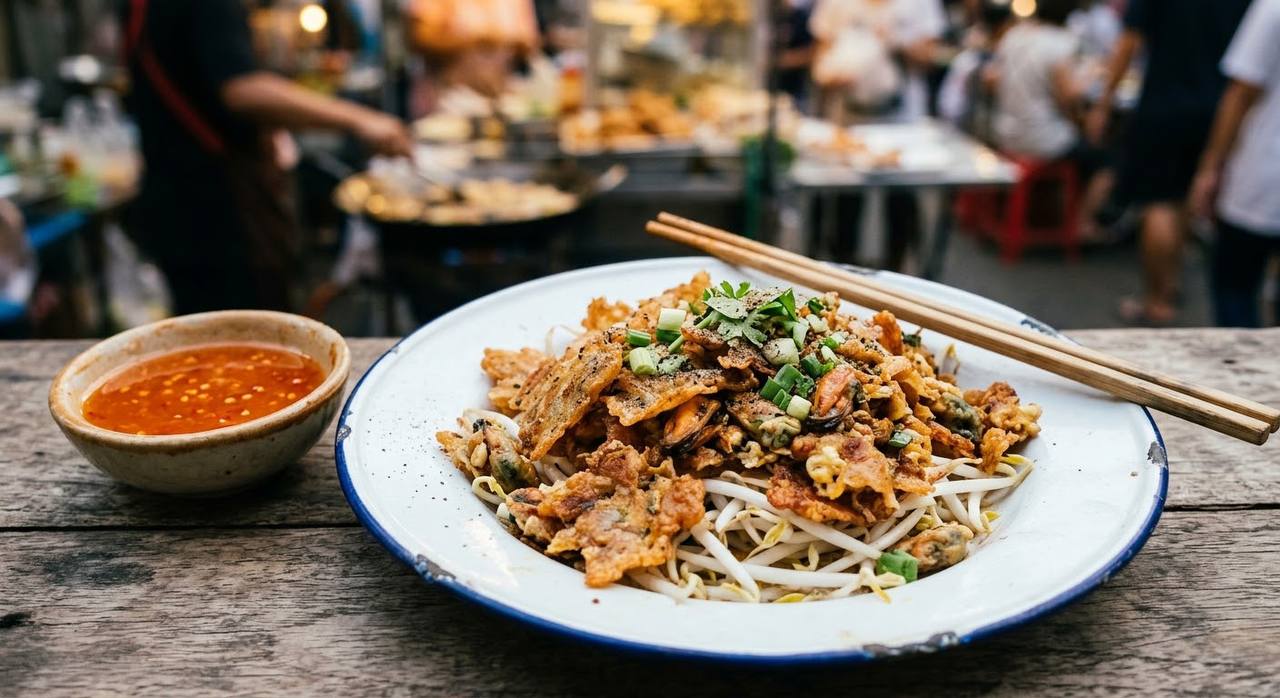
Mussels in a three-flour batter, fried until the edges shatter, egg broken over and torn into shards — on a bed of bean sprouts, under a squirt of sweet chilli. The street-stall pancake.

Hoy tod (หอยทอด) — crispy torn mussel pancake over bean sprouts with sweet chilli dipping sauce

The Shatter at the Edge

หอยทอด — literally "fried mussels" — is the dish of the big flat griddle, and the Kapook source opens by naming the shrines: หอยทอดชาวเล, นายหมง, เยาวราช — the stalls people queue for. What they queue for is a textural contradiction: a batter that is soft in the middle and shatteringly crisp at the torn edges, studded with mussels, an egg spread over the top, and a sauce that is half sweet chilli and half sriracha.

The crisp is engineered, not lucked into. The source batter runs on three flours: crispy frying flour for the shatter, rice flour for the structure, and แป้งเท้ายายม่อม — arrowroot starch — for a crunch that holds. Then the recipe's quiet secret: น้ำปูนใส, clear lime water, two spoonfuls that keep the crisp alive longer — the same calcium-lime solution Thai cooks use to keep frying batters and desserts firm. The source marks it optional for those who can't get it; the crisp survives either way, just not as long.

And one instruction defines the whole dish: don't keep it as one sheet. Break the pancake into pieces in the pan and keep flipping — "ชิ้น ๆ แยกตัวกัน จะทอดได้กรอบมากยิ่งขึ้น" — separate pieces fry crisper. The pancake arrives as golden shards over a tangle of bean sprouts, sauce on the side.
The Recipe (serves 2 — the Kapook version)

ThaiEnglishAmount
หอยแมลงภู่Mussels, shelled1 cup
ไข่Eggs2
ต้นหอมซอยSpring onions, chopped2 tbsp
ถั่วงอกBean sprouts1 cup
แป้งทอดกรอบCrispy frying flour4 tbsp
แป้งข้าวเจ้าRice flour2 tbsp
แป้งเท้ายายม่อมArrowroot starch3 tbsp
ผงปรุงรสSeasoning powder1 tsp
พริกไทยGround pepper1 tbsp
ซอสปรุงรสSeasoning sauce1 tbsp
น้ำมันพืชVegetable oil3 tbsp
น้ำเปล่าWater1/2 cup
น้ำปูนใสClear lime water (optional — keeps the crisp longer)2 tbsp
น้ำจิ้มไก่ + ซอสพริกSweet chilli sauce + sriracha (the dipping sauce)4 + 2 tbsp

The Method

  1. Build the batter. The three flours with the seasoning powder; then the lime water if using, the seasoning sauce and the water — a batter that pours but doesn't run thin.
  2. Load it. Pepper, mussels and spring onions folded through; rest the batter while you mix the sauce — sweet chilli for chicken and sriracha, two parts to one.
  3. Flat pan, hot oil. Pour the batter in and spread the mussels out evenly so every bite gets shellfish.
  4. Egg over. When the batter starts to set, crack the eggs on and spread them around. Medium heat, first side done, flip.
  5. Tear and crisp. Break the pancake into shards and keep flipping — separate pieces fry crisper than a sheet. Push the crisp pieces aside, flash the bean sprouts with a touch of soy, pile the hoy tod on and serve with the sauce.

Where Thai Sources Disagree

The flour blend. Kapook: crispy flour + rice flour + arrowroot. One Pantip home cook: corn starch + crispy flour. Another, cooking abroad: plain wheat + rice + corn flour. Every kitchen rebuilds the crisp from what's in the cupboard — the goal is the same shatter.

Lime water. Kapook's น้ำปูนใส is the professional trick for a crisp that lasts; the Pantip versions skip it entirely. Both are published as correct.

The sauce. Kapook mixes ready-made sweet chilli and sriracha — "อร่อยแบบคนไกลบ้าน", delicious even far from home. Some Pantip cooks build the sauce from scratch; the flavour target is the same sweet-hot tang.

Fresh vs blanched mussels. The Pantip cooks insist fresh, raw mussels fry better than pre-blanched ones — and their cleaning method is the careful one: pull the byssus thread out, wash, then rest the meat in a sieve in the fridge so the water drains and the mussels stay firm.

One sheet or many shards. Kapook breaks the pancake up deliberately — more edges, more crisp. The street stalls serve the shards piled; a whole round pancake is the polite restaurant version.

How Western Versions Get It Wrong

UK Ingredient Notes

Sources

This recipe is translated from the following Thai-language sources. Where they disagree, we've said so.

1. Kapook (ครัวตุ๊กตา) — "หอยทอด สูตรแป้งกรอบนานทำเองง่าย ๆ ที่ครัวบ้าน พร้อมน้ำจิ้มสูตรพิเศษ" (the three-flour + lime-water version used here) — cooking.kapook.com

2. Pantip (ครัวตุ๊กตา) — "หอยทอดร้อน ๆ กรอบ ๆ ทำเองได้ค่ะ" (the same cook's two-plate home version) — pantip.com

3. Pantip — "มาทำหอยทอด แบบง่าย ๆ ไว้ทำกินที่บ้าน" (corn-starch and crispy-flour blend, 4 servings) — pantip.com

4. Pantip — "หอยทอด กรอบนอกนุ่มใน ไม่ง้อแป้งทอดกรอบ" (no-crispy-flour blend, plus the byssus-removal and fridge-dry cleaning method) — pantip.com

Johnny Tiger
Johnny researches and translates Thai recipes from Thai-language sources — chefs, restaurants and home cooks in Thailand — and publishes them with their sources cited. No westernised shortcuts, no invented steps.