Recipe · Thailand · Street Food · The Crisp That Hides The Shellfish

Hoi Tod (หอยทอด)

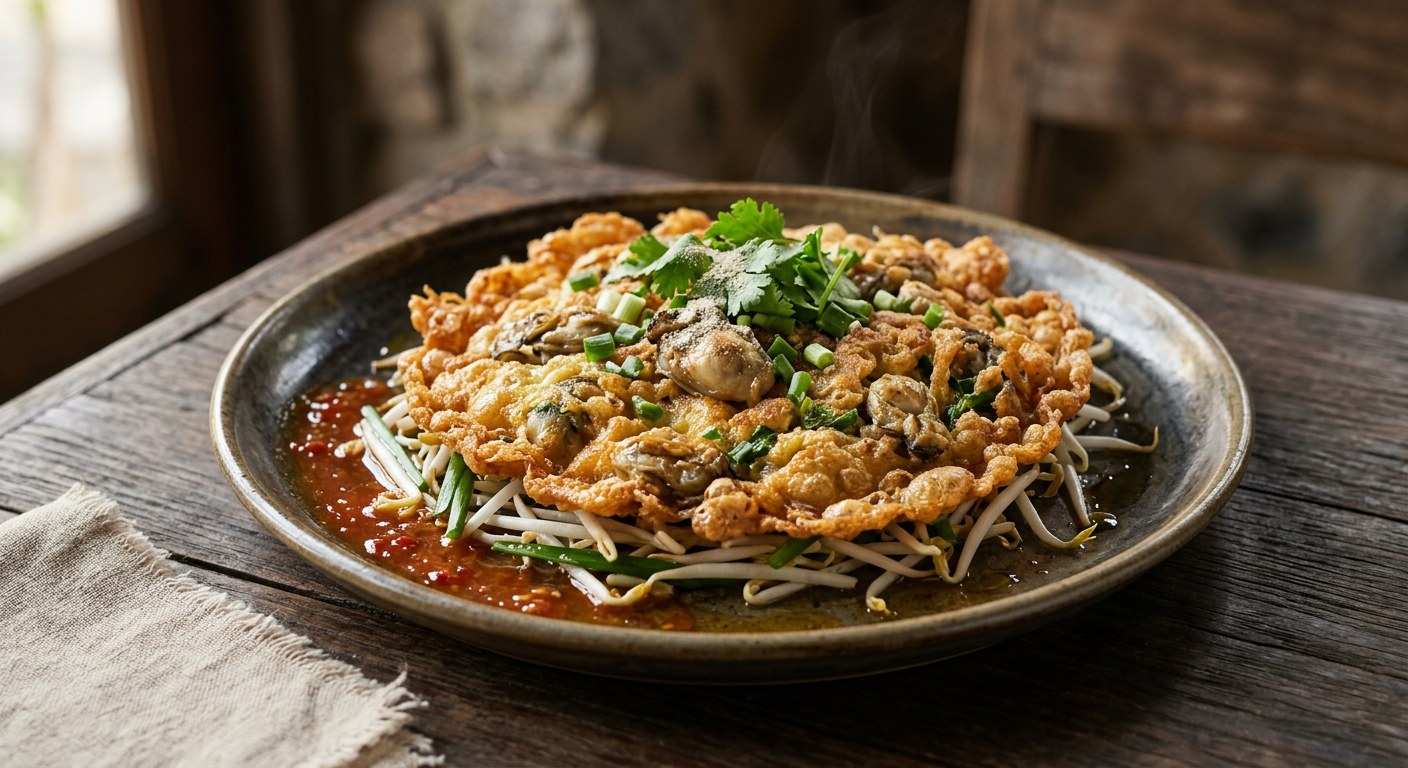
Mussels — or oysters — bound in a rice-flour and arrowroot batter, fried on a flat pan until it shatters, eggs smeared over the top, a tangle of beansprouts underneath and a sweet chilli dip on the side. The stall dish everyone waits for.

Hoi Tod

The Stall That Skimps On The Shellfish

หอยทอด translates simply — หอย, shellfish, ทอด, fried. But ask any Thai source what makes it worth eating and the answer is the batter, not the shellfish: rice flour, arrowroot starch and crisp-fry flour mixed with ice-cold water and, in the home recipes, a spoon of น้ำปูนใส (limewater) — the trick that keeps the crisp going long after the pan is off the flame.

Wongnai's editors draw the street-food dividing line neatly: หอยทอด is made with mussels and a batter fried until properly crisp, while ออส่วน (o-suan) is the oyster version with a soft, springy batter — same stall, two textures. The Pantip cook บ่งบ๊ง adds the complaint every customer knows: at the stalls, the batter buries the shellfish — "แป้งกลบหอยจนมิด มองไม่เห็น" — you order a plate and need a net to find the two or three mussels. Her fix, the same fix in every home recipe: make it yourself and load the shellfish.

The rest is ritual. Eggs cracked over the half-set batter and smeared across it, the cake flipped with two spatulas and cut into shards, beansprouts flash-fried in the same pan — or left raw and buried under the hot omelette so they cook in its heat — and a dip that every street stall mixes from two bottles: น้ำจิ้มไก่ (sweet chicken dipping sauce) and ซอสพริก (sriracha).

The Recipe (home version, from Kapook / ครัวตุ๊กตา and Pantip)

ThaiEnglishAmount
หอยแมลงภู่Mussels, cooked and shelled (or fresh oysters)1 cup
ไข่ไก่Eggs2
แป้งทอดกรอบCrispy fry (tempura) flour4 tbsp
แป้งข้าวเจ้าRice flour2 tbsp
แป้งเท้ายายม่อมArrowroot starch3 tbsp
น้ำปูนใสLimewater (keeps the crisp; optional)2 tbsp
น้ำเย็นจัดIce-cold water1/2 cup
ผงปรุงรสSeasoning powder1 tsp
พริกไทยป่นGround white pepper1 tbsp
ซอสปรุงรสSeasoning sauce (or light soy)1 tbsp
ถั่วงอกBeansprouts1 cup
ต้นหอมซอยSpring onion, sliced2 tbsp
น้ำมันพืชVegetable oil3 tbsp
น้ำจิ้มไก่ + ซอสพริกChicken dipping sauce + sriracha (the dip)4 tbsp + 2 tbsp

The oyster pot — ออส่วน (Wongnai, TrueID): oysters in a soft batter of arrowroot (or tapioca) starch thinned with water and seasoned with light soy or oyster sauce and pepper; garlic fried first, eggs scrambled in, beansprouts stir-fried alongside. Wongnai's tip for doneness: the batter turns translucent when it is cooked. Pantip's second batter: rice flour and Knorr crisp-fry powder with ice-cold water and limewater — no arrowroot. Her dip, when there is time, is boiled: sriracha, sugar, salt, vinegar and water simmered together.

The Method

  1. The batter. Mix the crisp-fry flour, rice flour and arrowroot with the seasoning powder. Stir in the limewater and seasoning sauce, then the ice-cold water a little at a time — Kapook warns it must be neither too thin nor too thick. Fold in the mussels and spring onion and rest the bowl briefly while you mix the dip: chicken dipping sauce and sriracha, four to two.
  2. The pan. Flat pan, oil, medium flame. Pour the batter in and spread it thin, scattering the mussels so every mouthful finds one. Pantip's rule: do not stir, and do not try to turn it until the underside is nearly cooked.
  3. The eggs. When the batter begins to set, crack the eggs over it and smear them across with the spatula. Fry until the underside is deep golden and crisp, then flip — two spatulas make the turn easy — and crisp the other side.
  4. The shards. Cut the cake into pieces. Kapook notes the extra step most home cooks learn from the stalls: separated pieces fry crisper than one whole sheet, so break it up and let the edges catch.
  5. The sprouts. Push the crisp pieces aside and flash-fry the beansprouts with a dash of seasoning sauce — under a minute, they must stay crunchy. Plate them first, lay the omelette over the top, scatter pepper and coriander and serve immediately, while it is still crisp, with the dip. Pantip's alternative: leave the sprouts raw on the plate and let the hot omelette half-cook them on the way down.

Where Thai Sources Disagree

The starch. Kapook and Pantip build the crisp from three flours — tempura flour, rice flour and arrowroot — while Pantip's second batter drops the arrowroot for Knorr crisp-fry powder alone, and Wongnai's soft ออส่วน uses a single spoon of tapioca starch. TrueID's o-suan leads with arrowroot over rice flour. Same pan, four different batters: the crisp ones lean on rice flour and tempura flour, the soft ones on starch alone.

The limewater (น้ำปูนใส). Kapook and Pantip stir pickling-lime water into the batter and credit it with keeping the crisp long — Kapook adds that if you do not have it, simply leave it out. Wongnai and the TrueID o-suan recipes do not use it at all.

The shellfish. Mussels for หอยทอด, oysters for ออส่วน, is the rule in Wongnai and TrueID — but Pantip fries both in the same batter, and notes dried mussels soaked in water plump back to nearly fresh. Her verdict on the stalls stands: make it at home if you want to actually taste the shellfish.

The beansprouts. Kapook and Wongnai stir-fry the sprouts quickly with a little soy. Pantip gives the choice: stir-fried, or raw on the plate with the hot omelette set on top to cook them gently — the version, she says, for people who like their sprouts barely done.

The dip. Everyone starts from the same two bottles — chicken dipping sauce and sriracha — but the ratio moves: Kapook goes four to two in favour of the sweet sauce, Pantip two to one, TrueID equal parts. Pantip alone adds the made-from-scratch version, boiled sriracha with sugar, salt, vinegar and water, and the old-style alternative of sliced chillies pickled in vinegar.
How Western Versions Get It Wrong

UK Ingredient Notes

Sources

This recipe is translated from the following Thai-language sources. Where they disagree, we've said so.

1. Kapook Cooking — "หอยทอด สูตรแป้งกรอบ" by tukata001 (the batter and method used here) — cooking.kapook.com

2. Pantip — "หอยทอดแป้งกรอบ - 2 สูตรอร่อยเหาะ" by บ่งบ๊ง, topic 30652509 (the two-batter recipe, the boiled dip, the shellfish-skimming complaint) — pantip.com

3. TrueID Food — "8 สูตรหอยทอด ออส่วน ทะเลทอด" (the stall-selling compilation of batters and dips) — food.trueid.net

4. Wongnai — "ออส่วน สูตรนิ่ม เมนูหอยชวนฟิน" (the soft oyster version; the hoi tod vs o-suan distinction) — wongnai.com

5. TrueID Food — "แจกสูตร ออส่วนหอยนางรม พร้อมน้ำจิ้มรสเด็ด" by nnanthisin (the arrowroot-led oyster batter) — food.trueid.net

Johnny Tiger
Johnny researches and translates Thai recipes from Thai-language sources — chefs, restaurants and home cooks in Thailand — and publishes them with their sources cited. No westernised shortcuts, no invented steps.