Recipe · Thailand · The Canal Bowl
Guay Tiew Ruea (ก๋วยเตี๋ยวเรือ)
The noodle bowl that was sold from boats — broth dark with spice and blood, pork and liver and crackling, served in bowls small enough to stack.
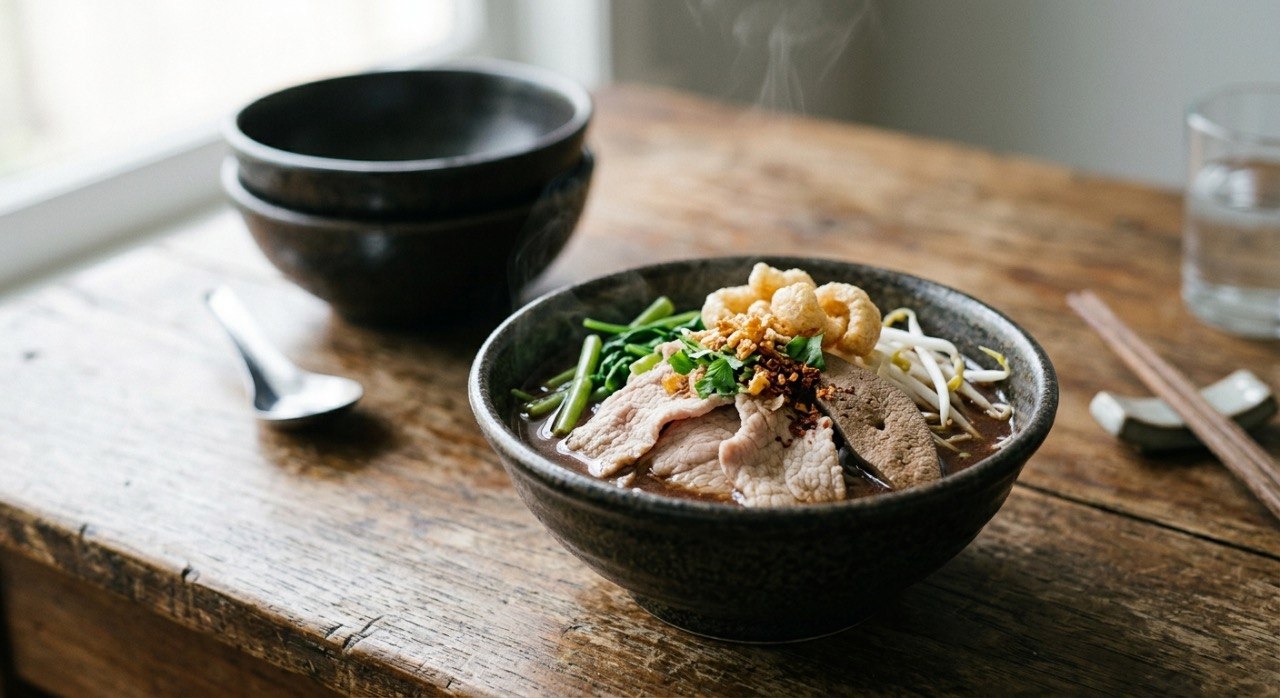
The noodle bowl that was sold from boats — broth dark with spice and blood, pork and liver and crackling, served in bowls small enough to stack.
ก๋วยเตี๋ยวเรือ — "boat noodles" — is named for its origin: vendors who cooked and sold from narrow boats on Bangkok's canals, serving in small bowls so nothing spilled when the boat rocked. The bowls stayed small even after the boats moved onto land, and the dish kept its identity: a broth so dark and dense it's practically a sauce.
The darkness is the recipe. The Wongnai formula runs pork spine under a muslin bag of star anise, cinnamon, Sichuan pepper, coriander seed and cumin, then the defining Thai additions: เต้าหู้ยี้, fermented tofu with its brine, dark soy, seasoning sauce, pickled garlic brine — and a splash of coconut milk. Simmered one to two hours with the scum skimmed, the broth comes out mahogany-dark and clings to the noodles.
The service is the other signature. Pork blood goes into the bowl raw and the hot broth sets it — the Wongnai method — adding body and iron depth, then the noodles, bean sprouts, water spinach, sliced pork and liver, with fried garlic and pork crackling on top. The Kapook Ayutthaya version is the regional cousin: same herb bag, but a proud splash of coconut milk and either pork spine or beef bones depending on the shop.
| Thai | English | Amount |
|---|---|---|
| เล้ง | Pork spine | 500 g |
| อบเชย | Cinnamon sticks | 4 |
| โป๊ยกั๊ก | Star anise | 10 |
| พริกหอม | Sichuan pepper | 2 tbsp |
| ลูกผักชี / ยี่หร่า | Coriander seeds / cumin | 3 tbsp / 1 tbsp |
| ซอสปรุงรส | Seasoning sauce | 5 tbsp |
| ซีอิ๊วดำ | Dark soy sauce | 5 tbsp |
| เต้าหู้ยี้ | Fermented tofu, with brine | 7 cubes |
| น้ำกระเทียมดอง | Pickled garlic brine | 1 cup |
| กะทิ | Coconut milk | 100 ml |
| ใบเตย | Pandan leaves, knotted | 7 |
| น้ำเปล่า | Water | 6 cups |
To serve: rice noodles, sliced pork, liver, bean sprouts, water spinach, pork blood, fried garlic, pork crackling.
Coconut milk or not. The Ayutthaya style is known for its coconut milk; the Wongnai recipe also carries 100 ml; the plainer Bangkok versions skip it. The TTB Foundation chef's tips land on the milk side — "add coconut milk to the broth to deepen its richness." The milk rounds the broth's edge; without it the bowl is sharper and blacker.
Pork or beef. The Ayutthaya source builds the broth on pork spine for the pork version and beef bones for the beef version. The classic boat bowl is pork — liver and all.
The blood. Wongnai sets raw blood with the hot broth in the bowl; Tecnoplus's ancient recipe simmers 200 g of fresh blood straight into the stock; the TTB tips say refrigerate the blood until it goes in the pot. Both thicken the broth; the bowl-set version is silkier.
The spice bag. Wongnai runs cinnamon, star anise, Sichuan pepper, coriander seed and cumin; Tecnoplus's ancient set swaps in liquorice root (ชะเอม) and cloves alongside the usual cinnamon and star anise. The liquorice marks the old formula.
Sugar. The Ayutthaya tips insist on real coconut sugar for the roundness of the broth; the Wongnai recipe sweetens through the seasoning sauce alone. The coconut-sugar note marks the Ayutthaya style.
The meat. Tecnoplus marinates the pork slices — white soy, oyster sauce, sugar, pepper, sesame and garlic — before they hit the broth; the TTB document uses the baking-soda rub (ขยำกับเบคกิ้งโชดา) for tenderness. Wongnai's pork goes in plain. Three shops, three meat treatments.
Bowl size. The Kapook 2025 roundup notes the shops sell bowls in small sizes — the boat habit that never left. A full dinner bowl of this broth is a lot; the real thing comes small and stacked.
This recipe is translated from the following Thai-language sources. Where they disagree, we've said so.
1. Wongnai — "วิธีทำ ก๋วยเตี๋ยวเรือ เมนูเส้นรสเด็ดไม่ต้องปรุงเพิ่ม ขายง่ายกำไรงาม!" (the recipe used here) — wongnai.com
2. Kapook — "สูตรก๋วยเตี๋ยวเรืออยุธยา ใส่กะทิ น้ำซุปเข้มพร้อมเคล็ดลับ" (the Ayutthaya coconut-milk style) — cooking.kapook.com
3. Kapook — "ก๋วยเตี๋ยวเรือร้านดัง 2025 ห้ามพลาด พร้อมแจกสูตรก๋วยเตี๋ยวเรือหมูน้ำตกฟรี" (shop roundup + free pork recipe) — cooking.kapook.com
4. Raggan Shop — "วิธีทำ ก๋วยเตี๋ยวเรือ/ก๋วยเตี๋ยวน้ำตก" (shop-style guide) — ragganshop.com
5. เทคโนโลยีพลัส (Tecnoplus) — "ก๋วยเตี๋ยวเรือสูตรโบราณ น้ำซุปเข้มข้น" (the ancient recipe: blood in the stock, liquorice root, pork marinade) — tecnoplusthai.com
6. TTB Foundation (ไฟ-ฟ้า by ttb) — "ก๋วยเตี๋ยวเรือ สูตรโบราณ โดย เชฟโอ๋ - อาจารย์ญาณัช มะอาจเลิศ" (institutional recipe: baking-soda pork rub, น้ำส้มพริกดำ, crackling, and the 6 broth tips) — ttbfoundation.org