Recipe · Thailand · Deep Fried

Gai Chup Paeng / Gung Chup Paeng (ไก่ชุบแป้งทอด / กุ้งชุบแป้งทอด)

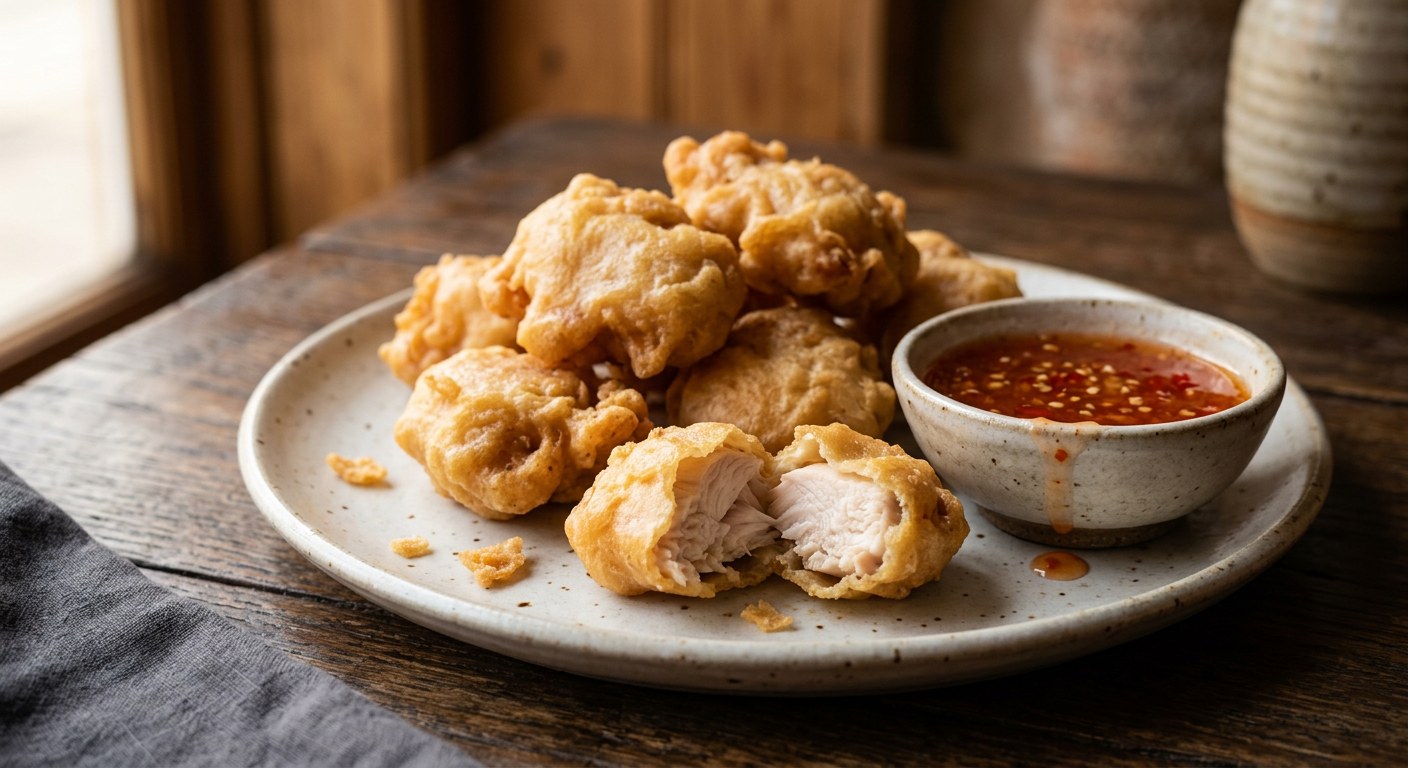
Thai-style battered chicken and prawns — crispy, light tempura-style coating over tender meat or succulent seafood, served with sweet chilli dipping sauce.

Gai Chup Paeng / Gung Chup Paeng (ไก่ชุบแป้งทอด / กุ้งชุบแป้งทอด)

ไก่ชุบแป้งทอด / กุ้งชุบแป้งทอด

Light, crispy tempura-style batters coating tender chicken or succulent prawns — a Thai take on battered and fried proteins that emphasises clean flavours and shatteringly crisp textures.

These dishes represent Thai cooks' approach to borrowed techniques — taking the Japanese tempura concept and adapting it with local ingredients and serving styles. The result is lighter and less oily than traditional Western batters, with a coating that puffs and crisps beautifully while staying delicate.

Popular at rice-and-curry shops (ร้านข้าวราดแกง) and as drinking snacks, the appeal lies in the textural contrast: the immediate crack of the crispy shell giving way to moist, well-seasoned meat or the sweet snap of perfectly cooked prawns.

The Recipe (serves 4 · ~30 min)

Protein

ThaiEnglishAmount
อกไก่ หรือ กุ้งใหญ่Chicken breast OR large prawns, prawns: peeled, deveined, tails on400g chicken (sliced thin) OR 12 large prawns

Marinade

ThaiEnglishAmount
ซีอิ๊วขาวLight soy sauce1/2 tbsp
ซอสปรุงรสSeasoning sauce1 tsp
น้ำตาลทรายSugar1/2 tsp
พริกไทยป่นGround white pepper1/2 tsp
เกลือSalt, for prawns only1/3 tsp

Batter

ThaiEnglishAmount
แป้งทอดกรอบ (สำหรับคลุกแห้ง)Crisp-fry flour (dry coating)1/4 cup
แป้งทอดกรอบ (สำหรับแป้งเปียก)Crisp-fry flour (for batter)1/2 cup
แป้งสาลีPlain flour, optional, for extra crispiness3 tbsp
น้ำโซดาเย็นจัด หรือ น้ำเย็นจัดIce-cold soda water OR water1/2 cup

Frying

ThaiEnglishAmount
น้ำมันพืชVegetable oilfor deep frying

The Method

  1. Prepare the protein. **For chicken:** Slice breast thinly across the grain, about 0.5cm thick. **For prawns:** Peel and devein, leaving tails on; make shallow cuts along the belly to prevent curling. Pat completely dry with paper towels.
  2. Marinate. Mix protein with soy sauce, seasoning sauce, sugar and white pepper. For prawns: add salt as well. Marinate 10-15 minutes — don't over-handle chicken or skin may slip off.
  3. Make the batter. Mix the second portion of crisp-fry flour with plain flour (if using). Gradually add ice-cold water while whisking until smooth and lump-free. Batter should coat the back of a spoon but not be too thick. Keep cold until use.
  4. Coat and fry. Heat oil to 170°C for deep frying. First: toss each piece in DRY flour, shaking off excess. Then: dip in the cold wet batter, allowing excess to drip off. Lower into oil carefully — don't overcrowd the pan. Fry over medium heat, turning once, until golden and crispy. **Chicken:** 3-4 minutes total; **Prawns:** 2-3 minutes total.
  5. Drain and serve. Lift out and drain on paper towels or wire rack. Rest briefly before slicing chicken (prevents coating separation). Serve immediately while crispy and hot.

The technique

Double-coating is essential. The dry flour coating creates a base for the wet batter to adhere to — without this step, the batter slides off during frying, creating uneven, patchy results. This technique borrowed from Japanese tempura ensures complete, even coverage.

Temperature control matters twice. The batter must be ice-cold for maximum lightness — the temperature shock when it hits the hot oil creates the characteristic puffed, airy texture. The oil temperature needs careful monitoring: too hot and the coating browns before the protein cooks through; too cool and it absorbs oil, becoming heavy and greasy.

Minimal handling preserves texture. Over-mixing the batter develops gluten, making it tough rather than crisp. Similarly, chicken shouldn't be over-marinated or aggressively handled — this can cause the skin to slip off during coating and frying.

Timing is crucial. Both chicken and prawns cook quickly, and the visual cues are more reliable than strict timing. The coating should be deep golden and sound hollow when tapped; prawns are done when they've curved into a C-shape and the batter is crispy throughout.
Protein preparation

Chicken breast benefits from thin, even slicing across the grain. This ensures quick, even cooking and makes the final dish easier to eat. The brief marinade penetrates the thin pieces quickly, adding flavour without requiring long marinating times.

Prawn preparation prevents problems. Proper deveining and the shallow belly cuts (called "butterflying" in Western cooking) prevent the prawns from curling into tight balls during frying, which would create uneven cooking and an awkward eating experience.

Moisture is the enemy of good batter adhesion. Both proteins must be completely dry before coating — any surface moisture dilutes the batter and prevents proper crisping.

Batter science

The flour blend creates texture. Commercial crisp-fry flour (available in Asian groceries) contains raising agents and specific proteins designed for light, crispy results. Adding a small amount of plain flour provides structure while maintaining the light texture.

Cold liquid creates steam pockets. The temperature differential between ice-cold batter and hot oil creates rapid steam formation, puffing the coating and creating the characteristic airy texture. Room temperature batter produces denser, less crispy results.

Consistency determines success. The batter should coat ingredients evenly without being so thick it dominates the protein flavour. It should fall in ribbons from a spoon but not be so thin it doesn't provide coverage.

Regional and serving variations

Rice-and-curry shop style (ข้าวราดแกง) typically serves these over rice with curry spooned alongside — the crispy protein provides textural contrast to the soft rice and saucy curry.

Drinking snack service pairs the fried pieces with cooling cucumber and tangy dipping sauces, creating a balance of hot-cold, crispy-fresh that's perfect with cold beer.

Modern fusion applications might serve the battered proteins in salads or wraps, though traditional Thai service focuses on the textural contrasts of the complete dish.

Storage and reheating

Best served immediately — the crispy coating loses its appeal within 20-30 minutes as steam from the protein softens it. Unlike some fried foods, these don't reheat well; the delicate coating becomes chewy rather than crispy.

For advance preparation, the proteins can be marinated hours ahead and the dry ingredients pre-measured, but the batter should be made fresh and the frying done just before serving.

Cook's notes

The satisfaction of perfectly executed chup paeng lies in achieving that moment of textural perfection — the crisp shell shattering to reveal perfectly seasoned, juicy interior — a technique that's simple in concept but requires attention to detail in execution.

Serving

Cook's Tips

Variations

Sources

This recipe is translated from the following Thai-language sources. Where they disagree, we've said so.

1. Pim.in.th (ครัวบ้านพิม) — https://www.pim.in.th/side-dish-by-chicken/1230-fried-chicken-breast

2. Cookpad Thailand (Phuthai Siam) — https://cookpad.com/th/recipes/5845790

3. Aroifin — https://aroifin.com/recipes/battered-prawns/

Johnny Tiger
Johnny researches and translates Thai recipes from Thai-language sources — chefs, restaurants and home cooks in Thailand — and publishes them with their sources cited. No westernised shortcuts, no invented steps.