Recipe · Thailand · The Chinese-Thai Restaurant Classic

Cashew Chicken (ไก่ผัดเม็ดมะม่วงหิมพานต์)

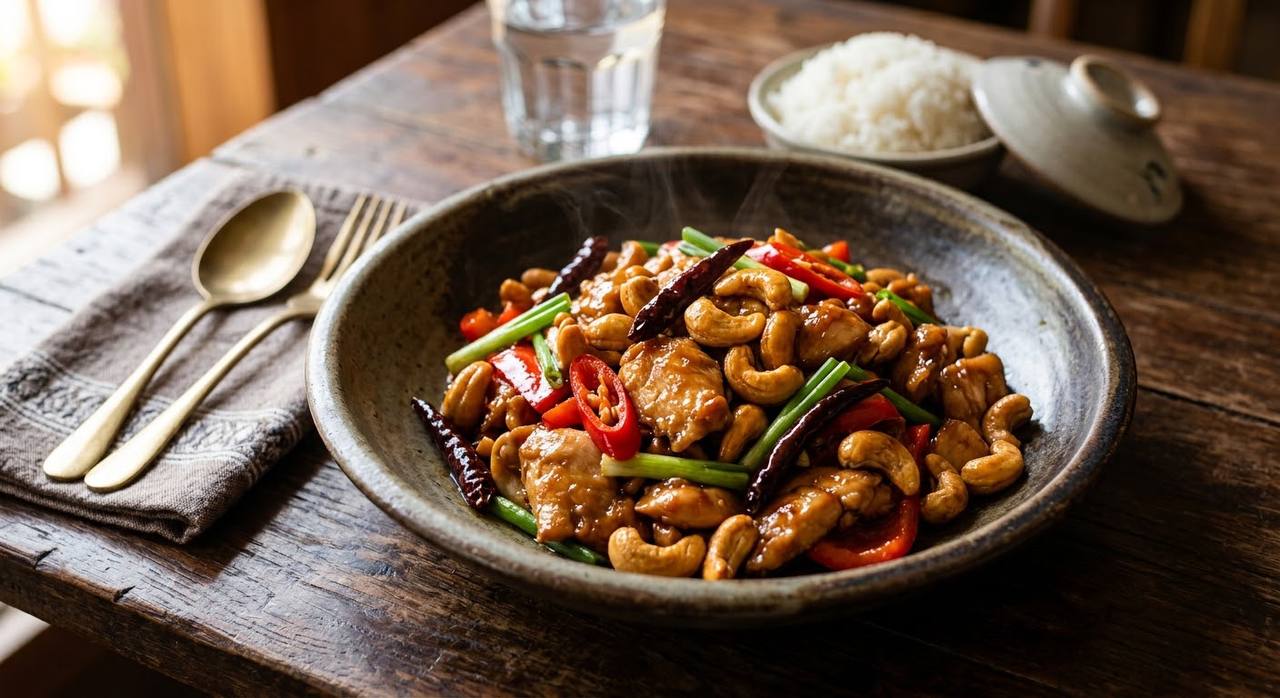
Floured chicken fried golden, roasted cashews, fried dried chillies and spring onion, tossed in an oyster-sauce gloss. The dish born in Bangkok's Chinese restaurants.

Cashew chicken (ไก่ผัดเม็ดมะม่วงหิมพานต์) — fried chicken tossed with roasted cashews, fried dried chillies and spring onion

The Chinese-Thai Restaurant Classic

ไก่ผัดเม็ดมะม่วงหิมพานต์ is the stir-fry every Thai knows from restaurant menus rather than home kitchens — a dish of Bangkok's Chinese restaurant lineage, cooked fast, glossed dark, and finished with things that crunch. Chicken, cashews, and the boldest move of all: dried chillies, fried whole and eaten like crisps. A plate of it is sweet, salty, nutty and smoky all at once, and it goes over rice with an authority few stir-fries match.

The architecture is simple but each part is treated separately. The chicken is floured and fried — the source's method — so each piece keeps a thin golden jacket instead of stewing in the wok. The cashews get their own gentle fry, or better, a dry-toast: the source's trick, five to eight minutes over low-medium heat, which keeps them crisp far longer because they never soak oil. The dried chillies go in the oil for seconds, just until they colour and turn brittle.

Then everything meets the garlic, the oyster sauce and a spoon of sugar, and leaves the wok glossy. The vegetable additions — onion, spring onion, pepper — go in all at once with the sauce, the source's other rule, so nothing over-cooks while the pan sits.
The Recipe (serves 2–3 — the Deksomboon version)

ThaiEnglishAmount
อกไก่ (หรือสะโพกไก่)Chicken breast, sliced — or thigh, the source's preference1½ cups
แป้งสาลีPlain flour, for coating½ cup
เม็ดมะม่วงหิมพานต์อบRoasted cashews½ cup
ซอสหอยนางรมOyster sauce, the rich kind2 tbsp
พริกแห้งเม็ดใหญ่Large dried chillies15
พริกชี้ฟ้าสีแดงRed spur chillies2
กระเทียมไทยThai garlic cloves3
น้ำตาลทรายSugar1¼ tsp
ต้นหอมSpring onions2
น้ำมันพืชNeutral oil, for fryingas needed

The Method

  1. Fry the chicken. Coated in flour, fried in hot oil until golden, drained on paper.
  2. The cashews. A gentle fry until just golden — or the source's better trick: dry-toast them five to eight minutes over low-medium heat so they stay crisp longer.
  3. The chillies. Dried chillies cut bite-size, fried seconds until crisp and just changed in colour, set aside.
  4. Garlic. Stir-fried until fragrant, then the chicken and cashews back in.
  5. Season. Oyster sauce and sugar, tossing to gloss — and any vegetables added all at once with the sauce, never stage by stage.
  6. Finish. Spring onions through, straight onto rice, eaten hot — the fried chillies are for eating, not for show.

Where Thai Sources Disagree

Thigh or breast. The aroifin source is blunt: thigh is the softest choice; breast needs a fifteen-minute marinade first or it goes hard. The Deksomboon recipe uses breast floured and fried, which protects it.

Fried or stir-fried chicken. The Chinese-restaurant method flours and deep-fries the chicken; home versions sometimes stir-fry it bare. The flour jacket is what holds the sauce's gloss.

The cashews. Fried briefly (Deksomboon) or dry-toasted five to eight minutes (aroifin). The dry-toast is the better trick — same crisp, no oil soak, longer crunch.

The dried chillies. Fifteen in the published recipe — fried whole pieces you eat. Reduce or deseed for a milder plate; remove none if you want the real thing.

Vegetables. Some recipes add onion, pepper or carrot. The source's rule for all of them: in with the sauce, all at once.

How Western Versions Get It Wrong

UK Ingredient Notes

Sources

This recipe is translated from the following Thai-language sources. Where they disagree, we've said so.

1. Deksomboon (เด็กสมบูรณ์) — "ไก่ผัดเม็ดมะม่วงหิมพานต์" (full quantities, the floured-fried method) — deksomboon.com

2. aroifin — "วิธีทำ ไก่ผัดเม็ดมะม่วง สูตรเด็ด เนื้อไก่ฉ่ำ" (the thigh-vs-breast advice, the dry-toasting trick, the all-at-once rule) — aroifin.com

Johnny Tiger
Johnny researches and translates Thai recipes from Thai-language sources — chefs, restaurants and home cooks in Thailand — and publishes them with their sources cited. No westernised shortcuts, no invented steps.